




























Epoxy for the floor in the home: The comprehensive guide to design, application and maintenance
In recent years, we have witnessed a real revolution in the field of interior design and renovations in Israel. If in the past we were used to thinking that renovating a floor necessarily required removing the old tiles, removing debris, and ordering a ceramic tiler for weeks of strenuous work, today the picture is completely different. The hot trend that is taking over private homes and designer apartments is undoubtedly Epoxy for the floor at home. This is an innovative solution, spectacular in its beauty, practical and durable for years. In this guide, we will dive deep into the world of epoxy coatings, understand how it integrates with existing flooring, what are the stages of the work, and how much it is expected to cost you.
What is epoxy floor coating for the home and who is it suitable for?
Epoxy is a polymer material that consists of two main ingredients: Resin and Hardener. When these two ingredients are mixed together in precise doses, a chemical reaction occurs that turns the thick liquid into a hard, impermeable and unusually durable plastic surface. Originally, epoxy floors were mainly applied in industrial buildings, garages, hospitals and hangars, due to their ability to withstand heavy loads, resistance to chemicals and ease of cleaning.
Over time, interior designers and architects recognized the material's tremendous aesthetic potential and began incorporating epoxy into home flooring. The material allows for the creation of a smooth, uniform surface (without seams or joints), with a modern, industrial or even artistic look (such as 3D epoxy or metallic epoxy). This coating is especially suitable for people looking for a clean and minimalist look, for those who want to renew their home's floor without breaking the existing flooring, and for those who suffer from allergies and prefer a floor that does not accumulate dirt and dust in the grooves.
Epoxy vs. Traditional Flooring: The Role of Ceramic Tile
Many people are confused about whether to choose epoxy flooring or hire a tiler to install new tiles (such as porcelain and granite). It is important to understand that both solutions are excellent, but they offer different benefits, and often they even complement each other.
Advantages of epoxy over ceramic
- Uniform surface without gaps: Unlike ceramic tile work, which lays tiles with gaps (fugues) that tend to darken and accumulate dirt, epoxy provides one smooth, continuous surface.
- Ease of cleaning: Since there are no grooves, passing a damp rag is enough to completely polish the floor.
- High durability: Epoxy is more resistant to scratches, impacts, and spills of staining substances like wine or oil than some of the cheaper ceramic tiles.
- Saving renovation time: Applying epoxy to an existing floor saves the process of dismantling the old flooring, removing waste, and prolonged noise.
Where does ceramic tile come into play?
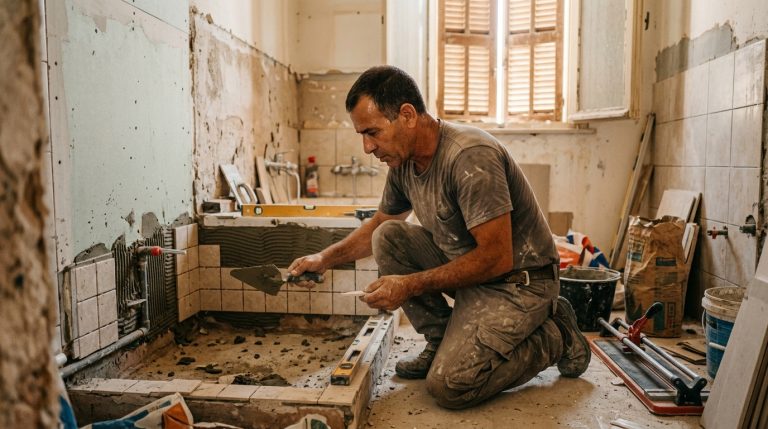
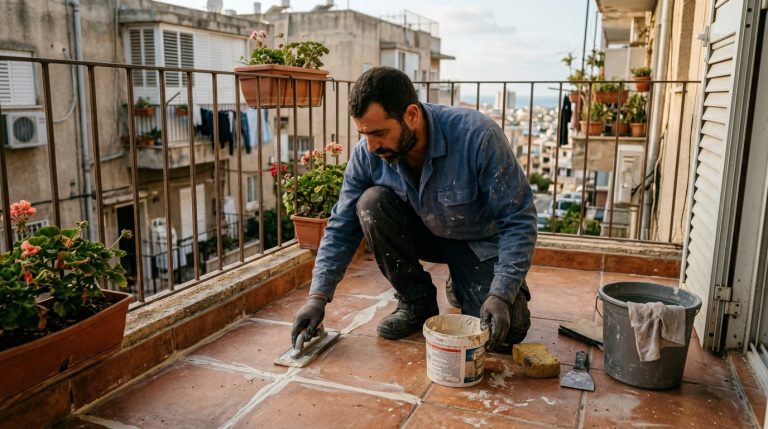
It is important to remember that epoxy is a material that takes the shape of the substrate on which it is applied. If the floor of your home is completely curved, sunken, or suffers from serious moisture problems, epoxy coating alone will not solve the problem. This is where the expertise of a professional ceramic tiler comes into play. In many cases, a floor that has been laid straight and professionally in the past by a skilled ceramic tiler is the perfect substrate for applying epoxy. Furthermore, if it is necessary to create complex slopes in bathrooms before pouring epoxy, preparation work by the tiler or renovation contractor is critical to the success of the project and to preventing puddles.
Epoxy application process on an existing floor
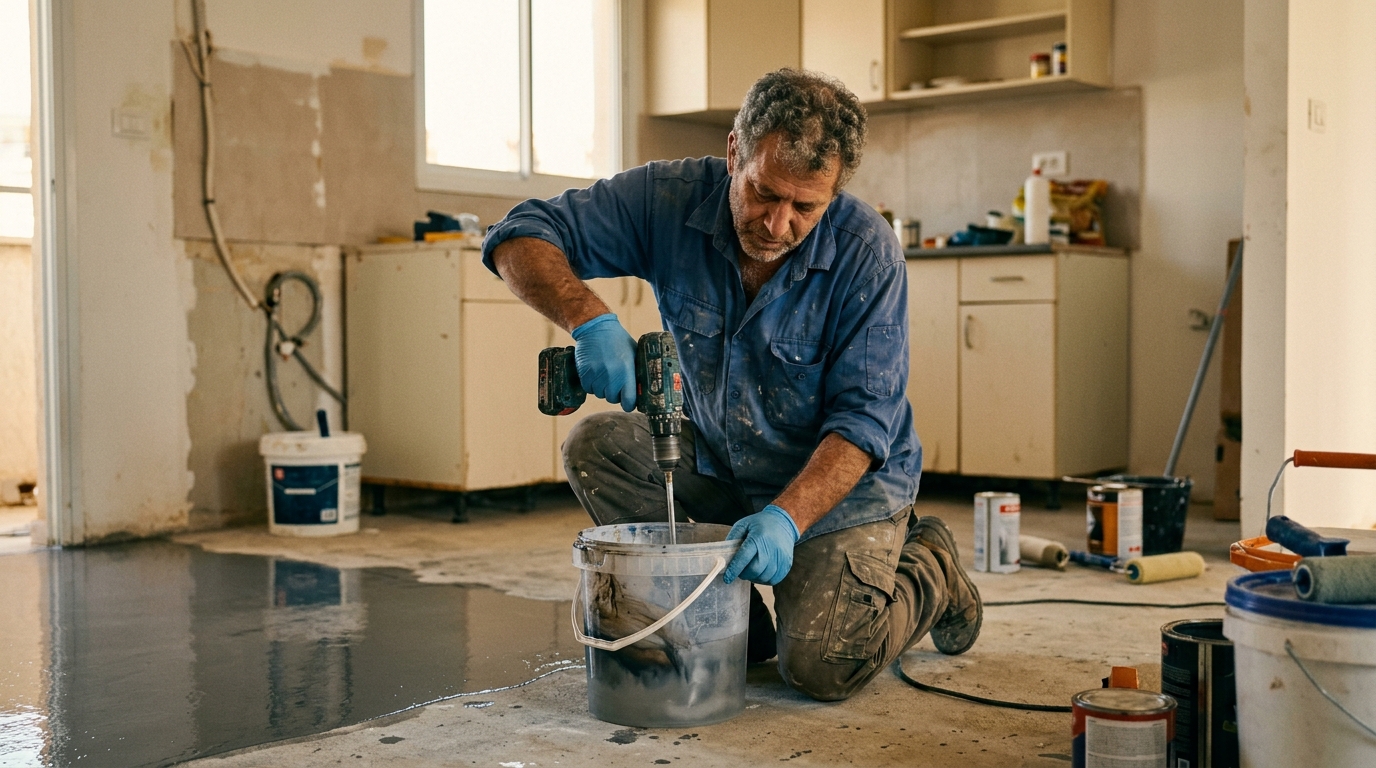
Applying epoxy to a home floor is a process that requires utmost precision, technical knowledge, and experience. Although do-it-yourself kits are available, it is highly recommended that you leave the job to a trained professional to avoid blistering or peeling. The professional process consists of several critical steps:
- Substrate preparation and polishing: This is the most important step. The existing floor (whether it is bare concrete or ceramic tile) should be polished using a diamond polishing machine. Polishing damages the glaze of the ceramic and allows the epoxy to adhere well.
- Filling gaps and repairs: All gaps (gaps) between the existing tiles must be filled, and cracks or breaks must be repaired using a dedicated epoxy putty, to create a completely flat surface (level).
- Primer application: Applying a penetrating primer that bonds the old substrate to the top epoxy layer and completely seals the surface.
- Casting the base layer (epoxy): After the primer dries, pour the epoxy. At this stage, you can combine different shades, create artistic effects such as a marble look, metallic waves, or sprinkle colored flakes to prevent slipping.
- Protective layer (sealer/polyurethane): Finally, it is customary to apply a transparent protective layer, usually based on polyurethane, which protects the epoxy from fine scratches and from yellowing as a result of exposure to the sun's UV rays.
Price table: How much does flooring and epoxy work cost?
The pricing of epoxy work varies depending on the condition of the infrastructure, the size of the space (the larger the space, the lower the price per meter), and the complexity of the design (smooth epoxy vs. 3D epoxy). Below is a table comparing the average costs in the Israeli market, including a comparison to the cost of ceramic tile work in order to obtain a correct proportion of the renovation costs.
| Type of work | Description and complexity | Estimated price range per square meter (in NIS) |
|---|---|---|
| Epoxy for the floor in the house (uniform shade) | Includes polishing of existing infrastructure, primer, and smooth epoxy casting in one shade (matte or glossy). | 250 – 450 NIS |
| Metallic / Patterned Epoxy | Creating complex patterns, marble looks or unique color combinations. | 400 – 700 NIS |
| Three-dimensional (3D) epoxy | Gluing a sheet of image (e.g. a seascape) and pouring extra thick transparent epoxy over it. | 600 – 1,000 NIS |
| Ceramic tile work (gluing) | Gluing porcelain granite tiles onto existing flooring (labor only, not including the cost of the tiles). | 150 – 250 NIS |
| Ceramic tile work (re-tiling) | Dismantling old flooring, filling in gaps and re-flooring (not including the cost of the tiles). | 250 – 450 NIS |
Note: The prices in the table are an average estimate only and may vary depending on the area of residence, the quality of the materials, and the reputation of the professional.
Incorporating epoxy in modern interior design
One of the most notable advantages of choosing epoxy for your home floor is the complete design freedom. Unlike tiles that come from the factory in predefined shapes and colors, epoxy is actually a work of art that is made in real time in your home. You can choose a polished concrete look (microtopping combined with epoxy) that will suit a living room with an urban industrial design, or choose metallic epoxy in pearl and gold tones for a luxurious and rich look reminiscent of boutique hotels.
Furthermore, epoxy is an ideal solution for wet spaces such as bathrooms. The lack of gaps completely prevents the accumulation of mold and fungus, and the absolute tightness of the material provides an additional sealing layer that protects the home's infrastructure from leaks. However, in bathrooms, it is mandatory to ask the professional to add an anti-slip material to the top layer, as a wet epoxy floor can be very slippery.
Maintenance and cleaning of epoxy floors
After you've invested time and money in your new coating, it's important to know how to maintain it so it lasts and retains its shine for many years. The good news is that maintaining an epoxy floor is one of the easiest things in the world of flooring.
- Daily cleaning: Lightly sweep or vacuum, then wipe with a damp rag with a mild detergent (preferably neutral, without strong acids or bleach that may dull the shine).
- Scratch prevention: Although the material is hard, it is not scratch-proof. It is recommended to stick felt stickers under the legs of chairs, tables, and heavy furniture, and to avoid dragging sharp objects on the floor.
- Stain treatment: If a blackening material is spilled, it should be wiped up quickly. Although epoxy is waterproof, leaving harsh chemicals on for an extended period of time can leave a mark on the top coat.
- Innovation: The big advantage is that even if after a decade the floor has been scratched and lost its shine, there is no need to replace it. A gentle polish can be performed and a new layer of polyurethane can be applied at a relatively low cost, and the floor will look like new again.
Summary and professional recommendations
In conclusion, Epoxy for the floor at home It is much more than just a passing trend; it is an advanced, durable, and spectacular covering solution that offers a great alternative to traditional flooring. Whether you are renovating an old apartment and want to avoid the mess of removing tiles, or you are building a new home and looking for a smooth, clean look without joints, epoxy is a choice worth seriously considering.
However, don't forget the importance of the foundation. A good job with ceramic tile in the past will ensure you have a solid foundation for epoxy today. Remember to choose only skilled and experienced professionals – those who can show you a rich portfolio of work and recommendations from previous clients. Don't compromise on the quality of the materials, and demand to know which brands of epoxy and polyurethane the contractor uses. Have a pleasant renovation and a shiny floor!