Among our clients

All information about flea control

Are you tired of the itching and biting? Don't let fleas take over!
Fleas are a bothersome and annoying nuisance, both for our pets and for us. They cause intense itching, discomfort, and can even transmit disease.

Flea control by a certified exterminator
Arriving from today to today, inclusive Responsibility for the work

Call now to order:
052-444-0565

Flea Control - Handyman's Stones

Why choose us?

We understand the importance of a flea-free living environment, which is why we offer targeted and effective pest control solutions, tailored to the level of infestation and your living environment. Our team of exterminators consists of experts with extensive experience and in-depth knowledge in the field of flea control, and they will be happy to provide you with a personal service tailored to your needs and those of your pets.

Pest control process

  • Diagnosis: We will perform a comprehensive diagnosis of the problem, identify the level of infestation and the places where fleas are spreading in the home and around the pets.
  • Planning We will build a customized pest control plan, taking into account your needs, the environment, and your pets.
  • Pest control We will carry out the pest control using safe and effective materials and methods, while taking care to target the infected areas and protect the pets.
  • Prevention We will provide you with recommendations and tips to prevent the return of fleas, such as caring for pets, regular cleaning of the house, and washing bedding and clothes at a high temperature.
  • Tracking: We will monitor the results of the pest control and ensure that the problem has been completely resolved. If necessary, we will perform additional pest control treatments.

Customer recommendations

Flea control price

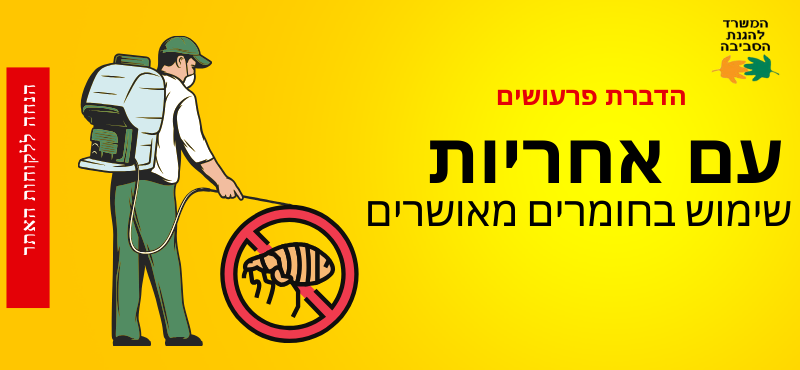
We are committed to performing safe and effective pest control with materials approved by the Ministry of Environmental Protection, and we also offer the most attractive price on the market. With us, you will enjoy pest control at an especially affordable price, with flea control ranging from only 300 to 650 shekels. Typically, the average cost is 450 shekels, and this includes comprehensive treatment in the home and garden, with a six-month warranty.

The importance of prompt treatment for flea infestations

  • Preventing spread: Fleas reproduce very quickly, so it is important to treat the problem as early as possible to prevent their spread in the home and surrounding area.
  • Disease prevention: Fleas can transmit various diseases, such as typhus and parkworm, so it is important to exterminate them to protect your health and the health of your pets.
  • Improving quality of life: Flea infestations can significantly impact your and your pets' quality of life. Flea control will allow you to enjoy quality time indoors and outdoors again without itching and bites.
 

What do fleas look like based on their lifespan?
Fleas go through four stages in their life cycle: egg, larva, pupa, and adult. Each stage looks different and has unique characteristics:

  1. egg:

    • size: Tiny, about 0.5 mm.
    • appearance: White, elliptical, almost invisible to the naked eye.
    • Location: They are deposited on the pet, but easily fall off and scatter around, especially in places where the pet rests, such as beds, carpets, and furniture.
  2. larva:

    • size: Up to 5 mm.
    • appearance: They resemble small, white or transparent worms, with fine hairs on their bodies.
    • Location: Live in the pet's environment, usually in dark, sheltered places, such as cracks, crevices, and inside carpets and furniture. Feed on organic matter, including flea droppings and dried blood.
  3. cocoon:

    • size: Similar to a caterpillar.
    • appearance: Wrapped in a white or brown silk cocoon, in which the larva develops into an adult.
    • Location: It is usually found in the same places as the larvae, in dark and protected places.
  4. graduate:

    • size: 1-4 mm.
    • appearance: Dark brown to black, horizontally flat, wingless, with long legs that allow them to jump great distances.
    • Location: Live on the pet and feed on its blood. Can also jump to humans and bite them.

Important to remember:

  • Fleas reproduce very quickly. A female flea can lay hundreds of eggs during her lifetime.
  • Most of the flea's life cycle (egg, larva, and pupa) occurs outside the pet, in the living environment. Therefore, it is important to treat not only the pet, but also the home and its surroundings to effectively eradicate fleas.

What materials are allowed to be used for flea control?

In Israel, it is permitted to use substances that are licensed and approved by the Ministry of Environmental Protection. These are usually substances from the pyrethroid group, which are less toxic to humans and pets than other substances. These substances often also contain an ingredient called IGR (Insect Growth Regulator), whose function is to prevent the development of adult fleas and thus stop their life cycle.

It is important to note:

  • Pesticides are dangerous substances and should therefore be used with caution and according to the manufacturer's instructions.
  • It is recommended to choose a licensed professional exterminator who is familiar with the materials allowed for use and the safest and most effective way to exterminate fleas.
  • The exterminator will be able to explain to you about the materials he uses and whether they are safe for your environment and your pets.
  • After spraying, it is important to ventilate the house well and follow the instructions provided by the exterminator.

Home methods for treating fleas
There are Home methods to alleviate the flea problem (important to note: not always as effective as professional pest control):

    1. Thorough combing of the pet:

      • Use a high-density flea comb and brush your pet regularly. Dip the comb in warm, soapy water to kill any fleas that get caught in it.
    2. Frequent bathing:

      • Bathe your pet with flea shampoo. Be sure to follow the instructions on the bottle.
    3. Thorough cleaning of the house:

      • Vacuum the entire house thoroughly, especially the areas where your pets spend a lot of time. Be sure to empty the vacuum bag immediately after vacuuming to prevent fleas from continuing to breed.
      • Wash all pet bedding, blankets and clothes, as well as your own bedding, at a high temperature (at least 60°C).
    4. Use of natural products:

      • There are a number of natural remedies that can help repel fleas, such as tea tree oil, lavender oil, apple cider vinegar, and herbs like rosemary and mint. These can be added to your pet's bath water, sprayed on furniture and carpets, or placed in bowls around the house.
    5. Homemade flea traps:

      • You can make homemade flea traps by filling a bowl with water and dish soap and placing it near a light source at night. Fleas will be attracted to the light and will drown in the water.

    Important to remember:

    • Home methods may alleviate the problem, but are not always enough to completely eradicate fleas.
    • In case of severe infestation, it is recommended to contact a professional exterminator.
    • Be sure to consult a veterinarian before using natural products on your pets.

How do I know if I have fleas in my house?
There are several methods you can try to identify if you have fleas in your home:

  1. Bites on the body:

    • Fleas tend to bite primarily in the legs and ankles. If you or your family members are suffering from itchy bites in these areas, it could be a sign that you have fleas in your home.
  2. Pet behavior:

    • If you have pets, pay attention to their behavior. If they are scratching excessively, biting themselves, or showing other signs of discomfort, it could be a sign of fleas.
  3. Searching for fleas and droppings:

    • Fleas are small, black insects that jump. Try to look for them on your pets, in their bedding, carpets, and other areas of the house where they spend a lot of time.
    • Flea droppings look like small black dots. You can find them on your pet's fur, in their bedding, or on light-colored surfaces in your home.
  4. Flea trap:

    • You can purchase flea traps that use light or heat to attract the insects. If you find fleas in the trap, this is a clear sign that they are in your home.
  5. "White sock" test:

    • Wear white, high socks and walk around your house, especially in areas where your pets spend a lot of time. If there are fleas in your house, they may jump onto the white socks and be easier to spot.
  6. Consultation with a veterinarian:

    • If you suspect your pet has fleas, take them to the vet for a checkup. The vet will be able to confirm the diagnosis and recommend appropriate treatment.

Important to remember: Even if you don't see fleas directly, signs like bites and itching may indicate their presence in your home. If you suspect you have fleas, it's recommended that you contact a professional exterminator to effectively treat the problem and prevent it from spreading.

Things What's important to know before pest control

Before ordering pest control, it is important to understand a few things: To ensure the effectiveness of the pest control and your safety:

    • Pet care: It is important to treat pets at the same time as disinfecting the house, to prevent re-infection.
    • Thorough cleaning: Before and after pest control, it is important to perform a thorough cleaning of the house, including vacuuming carpets, upholstery, and furniture, and washing bedding and clothes at a high temperature.
    • Prevention To prevent fleas from returning, it is important to continue to treat pets regularly, keep the house clean, and avoid contact with other animals that may be infected.

Remember: Pest control is a process that requires expertise and caution. Choosing a professional and reliable exterminator will ensure you effective and safe results.

Customer recommendations

For free consultation, leave your details or call:
052-444-0565

Contact us

Among our clients

Latest updates

Do you have questions?

The duration of the pest control varies depending on the level of infestation and the size of the area being treated. Typically, the pest control process takes between one and several hours.

Yes, we use pesticides that meet the strictest standards, approved by the Ministry of Environmental Protection, and are not harmful to humans or pets. We ensure the correct and safe use of pesticides, and provide you with detailed instructions to maintain safety.


Yes, we will provide you with detailed instructions for preparing for the pest control, including removing objects from the treated area, keeping pets and children away from the area during and after the pest control, and more.

The effectiveness of pest control varies depending on environmental conditions and the degree of adherence to prevention. In most cases, pest control is effective for several weeks to months. We provide a warranty on pest control services, so if the problem recurs, we will return to perform pest control again under certain conditions.