

























Cleaning a Mini Central Air Conditioner from Mold: The Professional, Comprehensive, and Complete Guide to a Clean Air Conditioning System
Air conditioning systems are an integral part of life in Israel, especially during the long, hot summer months. Most of us rely on our mini central air conditioner to effectively cool large spaces, but many tend to forget that an electrical appliance that works non-stop requires regular maintenance beyond basic filter cleaning. One of the most common, annoying, and dangerous problems is the buildup of mold and fungus within the system. When it comes to cleaning a mini central air conditioner from mold, it is not just an aesthetic matter or a solution to a bad odor, but an essential action to protect your health and the life of the air conditioner. This article, as part of a broad campaign to raise awareness of the importance of air conditioner cleaning, will provide you with all the professional information you need.
Why does mold form in mini central air conditioning systems?
To understand why a professional service is needed to clean a mini central air conditioner from mold, it is important to understand the physics behind the operation of the air conditioner. An air conditioner works on the principle of air circulation and condensation. The warm, humid air from inside the house is sucked into the indoor unit (the evaporator). The air passes through a frozen cooling coil, which causes the moisture in the air to condense and turn into water droplets. The water is supposed to drain out through the drain pipe, but in reality, the evaporator environment remains constantly humid and wet.
A combination of a humid environment, complete darkness (since the unit is installed inside a plasterboard ceiling or above a suspended ceiling), and dust that penetrates despite the filters, creates an ideal greenhouse for the growth of mold spores, fungi, and bacteria. In mini-central air conditioners, the problem is even more serious than in overhead air conditioners, because the indoor unit is significantly larger, the amount of air and moisture passing through it is enormous, and access to it is more complex, which causes years of neglect.
Health hazards: Why shouldn't you ignore mold in your air conditioner?
Ignoring the presence of mold in your air conditioner is out of the question when you understand the health implications. Once your air conditioning system is infected, every time you turn on the air conditioner, millions of mold spores and bacteria are released into the air you breathe. This condition is often referred to as Sick building syndrome. Prolonged exposure to polluted air can cause a wide range of medical symptoms, including:
- Respiratory system problems: Annoying coughs, shortness of breath, worsening of asthma, and wheezing.
- Allergic reactions: Frequent sneezing, eye irritation (red and watery eyes), itchy skin, and chronic runny nose with no apparent explanation.
- Fatigue and headaches: Exposure to toxins (mycotoxins) secreted by mold can cause headaches, dizziness, and a feeling of chronic fatigue.
- Danger to sensitive populations: Babies, the elderly, and pregnant women are much more susceptible to mold damage, and their immune systems may be significantly compromised.
How do we know if we need to order a mold-free mini central air conditioner?
Early detection of the problem can save you a lot of money and prevent health problems. There are several clear warning signs that your air conditioner needs emergency professional attention. The first and most obvious sign is Bad smell. If you smell mold, old socks, or a wet dog when you turn on the air conditioner, this is an almost certain sign that your air conditioner coil is covered in mold. The second sign is Black or green dots On the air conditioning louvers (grills) in the ceiling or around the air vents. A third sign concernsDecrease in cooling capacity: Mold that accumulates on the cooling fins blocks the free passage of air, which causes the air conditioner to cool less well and work harder. Additionally, if you notice that your electricity bill has jumped without a change in your consumption habits, the air conditioner may be working overtime due to mold and dirt blockage.
The effect of mold and dirt on the electricity bill and the lifespan of the air conditioner
Beyond the health aspect, professional air conditioner cleaning is a smart financial investment. A mini central air conditioner infected with mold and heavy dirt suffers a decrease of up to 30% in its energy efficiency. The compressor is forced to work longer to reach the desired temperature, which leads to increased electricity consumption. Moreover, the increased pressure on the system components causes accelerated wear. Periodic cleaning prevents costly malfunctions such as compressor replacement, gas leaks (caused by rust and corrosion caused by mold), and blockages in the drain pipe that can lead to flooding and water damage to your plaster ceiling.
Do-it-yourself vs. professional cleaning: What's the difference?
Many homeowners ask if they can clean a moldy mini central air conditioner themselves. The short answer is: only at the most basic level. What you Can and should What to do regularly (once every month or two) is to remove the air filters located in the return air inlet, wash them thoroughly with running water, dry them completely in the shade, and put them back in place. You can also wipe the external ventilation louvers with a damp cloth and a little disinfectant.
However, deep cleaning of the mold Must be performed by a professional. The evaporator coil of a mini central air conditioner is hidden deep within the ceiling, and accessing it requires dismantling internal parts. Using unsuitable cleaning agents can corrode the copper and aluminum components of the air conditioner, and splashing water without proper suction equipment and cover will cause irreversible damage to the electronic board, motor, and your plaster ceiling.
Work steps: This is how professional mold cleaning of air conditioners is done
When you call in a technician or air conditioner cleaning expert for a deep treatment of a mini central air conditioner, the process should include several defined and strict steps to ensure complete eradication of the mold:
- Preparation and protection of the work environment: The technician will spread plastic sheets and cover the furniture, floor, and walls below the air conditioner's access opening to prevent water damage and dirt.
- Initial disassembly: Opening the plaster ceiling (through the service opening), removing the filters and dismantling the wind booster (blower) if necessary and according to the level of access.
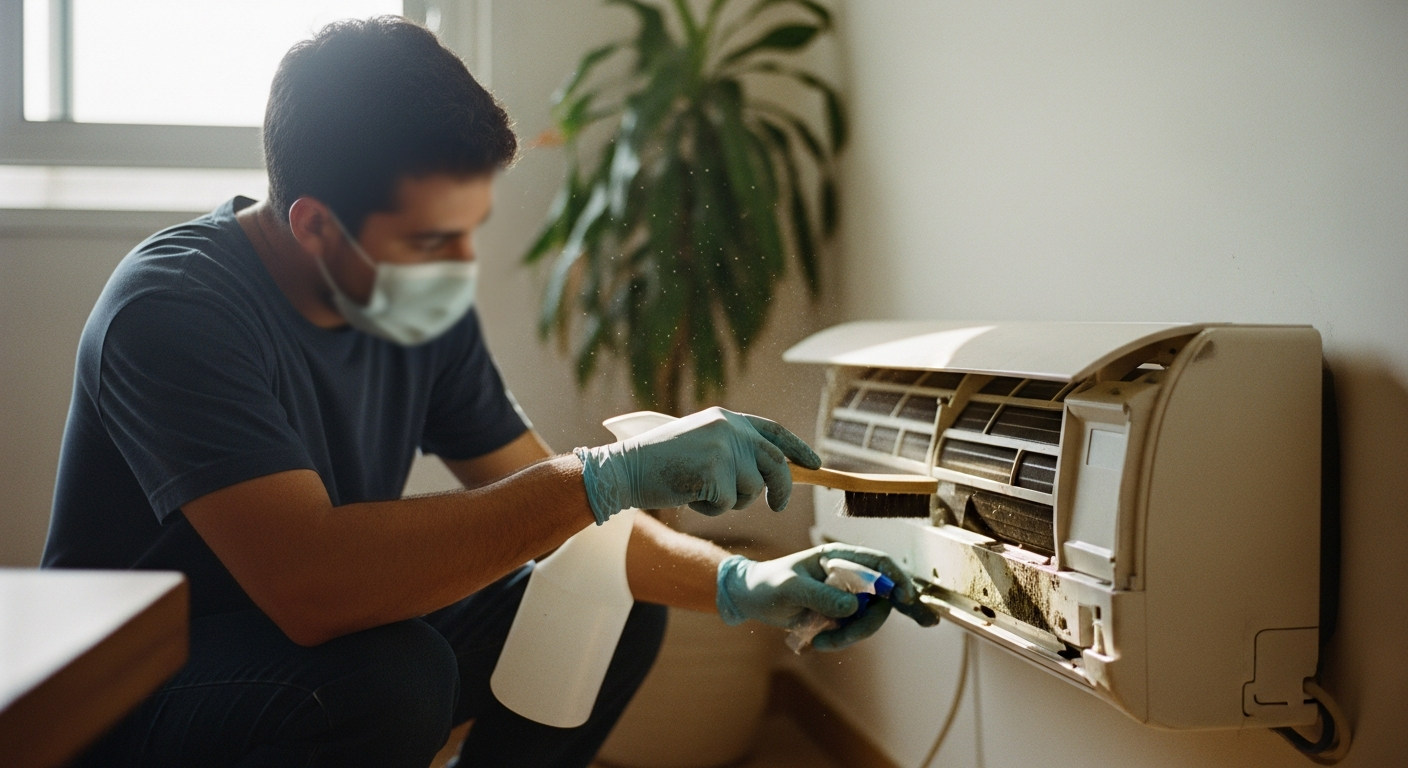
- Spraying chemicals: Spraying a dedicated, environmentally friendly substance approved by the Ministry of Health, which breaks down mold, grease, and bacteria from the cooling fins (the coil). The substance usually works by foaming and penetrating deep into the fins.
- High pressure water washing (Gernik): Using a pressure washer and a dedicated cover (a kind of tent or water collection bag connected to a drain pipe into a barrel), the technician flushes all the chemical, along with the dirt and mold, out of the system. This is the most critical step.
- Cleaning the drainage system: Flushing and disinfecting the internal drain tray and unclogging the drain pipe to prevent the accumulation of standing water in the future.
- Final disinfection and drying: Spraying an antibacterial substance that prevents future mold development, drying the system parts, and reassembling the plastics and filters.
Air conditioner cleaning services price list
To give you a clear idea of the costs involved in cleaning air conditioners, we have compiled an average price table currently used in the Israeli market. It should be noted that the price may vary depending on the complexity of accessing the mini-central air conditioner and the level of contamination.
| Service type | Description of the treatment and work required | Estimated price range (NIS) |
|---|---|---|
| Basic filter cleaning | Removing, manually rinsing the filters and replacing them (an operation that can be done by yourself) | 150 – 250 |
| Cleaning an overhead air conditioner from mold | Comprehensive treatment for a standard wall air conditioner, including pressure washing and partial disassembly | 350 – 550 |
| Cleaning a mini central air conditioner from mold | Opening a service hatch, wrapping the unit, pressure washing, battery disinfection and drain cleaning | 700 – 1,400 |
| Air conditioning duct cleaning | Inserting suction equipment, brushes, and robots into air conditioner ducts to clean dust and mold | Starting at 1,500 (depending on length) |
| Preventive care and fragrance | Adding tablets to the drain tray and spraying fungicide spray (as an additional treatment) | 100 – 200 |
Winning tips for preventing mold from returning after cleaning
Once you've invested the time and money to hire a professional to clean your mini central air conditioner from mold, you'll want to maintain the results over time. The key is a preventative routine. Here are the best professional tips for keeping your air conditioner perfectly clean:
- Enabling ventilation mode (Fan) before turning off: This is the magic secret that many people don’t know. About 10 to 15 minutes before you turn off the air conditioner completely, switch it from cooling mode (Snowflake) to ventilation only mode. This stops the compressor from working but continues to blow air over the cooling coil, which dries out the moisture and water on it. Without moisture, mold cannot grow.
- Cleaning filters religiously: Be sure to clean the return air filters once a month in the summer, and once every two months in the winter. A clogged filter causes the air conditioner to suck dust in towards the wet coil.
- Home ventilation: An air conditioner does not bring in new air from outside, but rather circulates the existing air in your home. Open windows every morning to let in fresh, oxygen-rich air and expel trapped moisture and impurities.
- Annual maintenance: Call a professional air conditioning technician for a routine inspection once a year, preferably before the start of the summer season, to check gas levels, the integrity of the drain pipes, and the cleanliness of the internal coil.
In conclusion
Proper care of your air conditioning system is critical to the quality of life in your home. Cleaning a mini central air conditioner from mold is not a luxury, but a necessary necessity that ensures clean air, significant electricity savings, and the prevention of respiratory diseases. It is important to understand that magic solutions such as scent sprays or filter cleaning alone are not enough when the internal system is infected. Always choose a professional, experienced air conditioning cleaning company that uses water pressure washing equipment and approved disinfectants, and you will enjoy fresh, cool, and healthy air throughout the seasons.