All information about installing a range hood
Need a range hood installed? You've come to the right place!
Avni Holdings specializes in professional installation of all types of range hoods, for every kitchen and every need.
Installation can be arranged at any time.
Installation of a range hood by a professional handyman
Arriving from today to today, inclusive Responsibility for the work
Symmetrical installation according to the standard
When will you need a range hood installer?
1. You have purchased a new range hood: It goes without saying, right? Whether it's a new apartment, a kitchen renovation, or just replacing an old range hood, you'll need a professional installer to perform the installation correctly and safely.
2. The existing hood broke down: If your range hood has stopped working, it may be a malfunction that requires repair by a qualified installer.
3. Kitchen renovation: During a kitchen renovation, it is often necessary to relocate electrical and gas points, which can affect the location and installation of the range hood.
4. Moving: When moving, you may need to install the range hood in a new location in the kitchen.
5. The hood is not functioning properly: If your range hood is not extracting fumes effectively, there may be a problem with the installation or the filter. In this case, it is recommended to call an installer to check the range hood.
Important to remember: Professional installation of a range hood is critical to the safety and proper functioning of the appliance.
Before purchasing a range hood - what is important to know?
Choosing a range hood is an important decision, as it is a significant item in the kitchen, both functionally and aesthetically. Before you rush to purchase a range hood, here are some things to consider:
1. Type of collector:
- Range hood with chimney: This hood is installed above the stove and connected via a chimney to an outlet in an external wall. It is very effective in extracting steam and odors, but requires a more complex installation.
- Chimney-free range hood (circulation): This hood filters the air and returns it to the kitchen. It is suitable for kitchens where it is not possible to install a chimney, but its efficiency in extracting odors is lower.
- Integral hood: This hood is built into the kitchen cabinet or countertop. It is aesthetic and saves space, but its suction power is usually lower.
- Hanging hood: This range hood hangs from the ceiling above a kitchen island. It is suitable for modern, open kitchens, but requires advance planning.
2. Suction power:
- The suction power is measured in cubic meters per hour (m3/h). The larger the kitchen and the higher the frequency of cooking, the higher the suction power you will need.
- It is recommended to choose a hood with a higher suction power than necessary, so that it can handle strong odors and smoke.
3. Noise level:
- Range hoods can be noisy, so it is important to check the noise level of the hood before purchasing.
- Noise intensity is measured in decibels (dB). The lower the number, the quieter the receiver.
4. Collector size:
- The size of the hood should match the size of the stove. It is recommended to choose a hood that is wider than the stove, so that it can effectively extract all the fumes and odors.
5. Design:
- The range hood is an integral part of kitchen design. It is important to choose a range hood that matches the design style of your kitchen.
- Today there is a wide variety of designs, from classic to modern.
6. Additional functions:
- Lighting: Most range hoods come with built-in lighting, which can be very useful while cooking.
- Timer: This function allows the receiver to turn off automatically after a certain time.
- Remote control: This function allows you to control the receiver remotely.
7. Price:
- The price of range hoods varies depending on the type, power, design, and additional functions.
- It is important to set a budget in advance and choose a receiver that fits your budget.
8. Warranty:
- Make sure there is a warranty on the range hood, and find out what the warranty includes.
Important tip: It is recommended to consult a professional before purchasing a range hood, so that he can tailor the hood that best suits your needs.
Types of range hoods
There is a wide variety of range hoods, tailored to different needs and design styles. Here is an overview of the common types:
1. According to the mode of operation:
- Range hoods with chimney (blower): These hoods extract fumes and odors from the kitchen through a chimney connected to an external vent. They are considered highly effective, especially for kitchens where cooking is done frequently or with strong odors.
- Advantages: High suction efficiency, excellent odor filtration.
- Disadvantages: Requires more complex installation, can be noisier.
- Chimney-free range hoods (circulation): These hoods filter the air and return it to the kitchen. They are suitable for kitchens where it is not possible to install a chimney, or when a simpler installation is preferred.
- Advantages: Easy and simple installation, suitable for kitchens without an external vent.
- Disadvantages: Lower suction efficiency, requires frequent filter replacement.
2. By location and configuration:
- Hanging hood: This range hood hangs from the ceiling above the stove, often above a kitchen island. It is suitable for modern, open kitchens, and gives an elegant look.
- Advantages: Modern design, suitable for kitchens with an island.
- Disadvantages: Requires advance planning, can be more expensive.
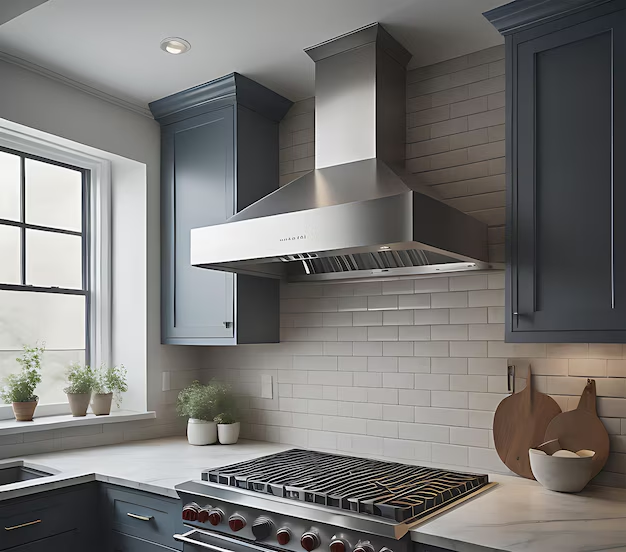
- Wall-mounted extractor hood: This hood is mounted on the wall above the stove. It is very common and suitable for a wide variety of kitchens.
- Advantages: Available in a variety of designs, relatively easy to install.
- Disadvantages: Less aesthetic than a hanging collet.
- Integral hood (built-in): This hood is built into the kitchen cabinet or countertop. It is aesthetic and space-saving, and is suitable for kitchens with a minimalist look.
- Advantages: Space-saving, clean and modern design.
- Disadvantages: Usually the lower the suction power, the more expensive it can be.
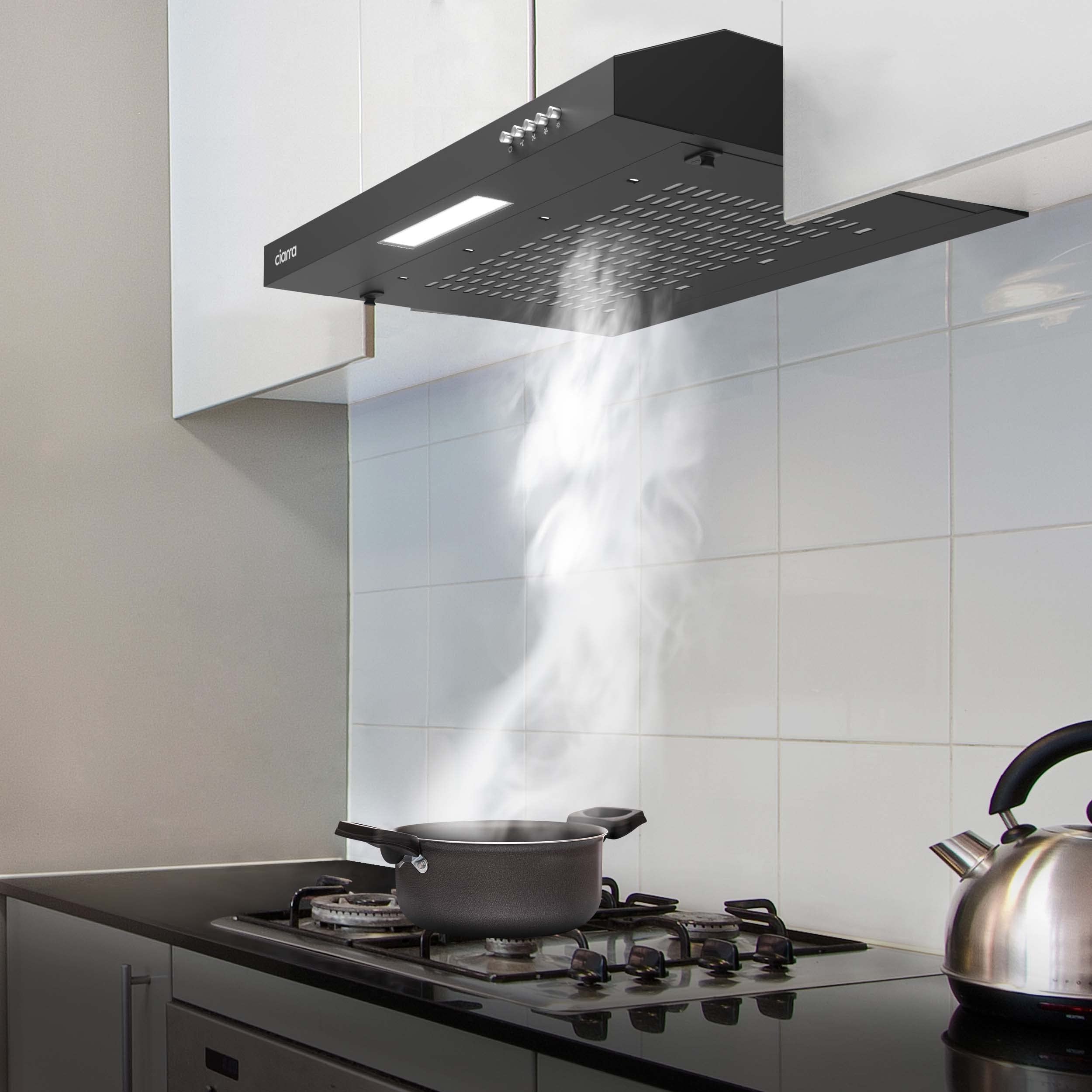
- Removable hood: This hood is installed under the kitchen cabinet and pulled out when needed. It is a practical and space-saving solution, and is suitable for small kitchens.
- Advantages: Space-saving, practical solution.
- Disadvantages: Medium suction power, less aesthetic.
3. By design:
- Classic range hood: This range hood is usually made of stainless steel and comes in a rectangular or cylindrical shape. It is suitable for kitchens with a traditional look.
- Modern range hood: This range hood comes in a wide range of designs, materials and colors. It is suitable for kitchens with a contemporary look.
- Designed hood: This range hood incorporates unique design elements, such as glass, wood, or decorative lighting. It is suitable for kitchens with a luxurious look.
Important to remember:
- The type of range hood that's right for you depends on the size of your kitchen, the frequency of cooking, your design style, and your budget.
- It is recommended to consult a professional before purchasing a range hood, so that he can tailor the hood that best suits your needs.
Hood installation process
The process of installing a range hood varies depending on the type of hood, the location of the installation, and its complexity. In general, these are the main steps in installation:
1. Preparation:
- Location selection: A suitable location for the range hood must be chosen, above the stove, taking into account the size of the range hood, the type of stove, and the location of the electrical and gas points.
- Infrastructure check: Make sure there is an available electrical outlet near the installation location. In the case of a hood with a chimney, make sure there is an external ventilation opening in the wall.
- Dismantling an old collet (if necessary): If there is an old range hood, it must be dismantled carefully.
2. Installing a wall-mounted range hood:
- Marking: The location of the receiver must be marked on the wall, taking care to ensure precise alignment and measurement.
- Drilling: Drill holes in the wall according to the markings, and install dowels.
- Receiver connection: The cooker hood must be attached to the wall using screws.
- Electrical connection: The collector must be connected to electricity, according to the manufacturer's instructions.
3. Installing a range hood with a chimney:
- Installing the bracket: A bracket for the hood must be installed on the wall, taking into account the weight of the hood and the location of the ventilation opening.
- Chimney connection: The chimney must be connected to the collector and the ventilation opening, taking care to seal the connections.
- Installing the collector: The hood must be installed on the bracket and connected to the chimney.
- Electrical connection: The collector must be connected to electricity, according to the manufacturer's instructions.
4. Installing an integral hood:
- Preparing the cabinet: The kitchen cabinet must be prepared for the installation of the hood by cutting a suitable opening.
- Installing the collector: The hood must be installed inside the cabinet, making sure to connect it to electricity and the ventilation opening (if necessary).
5. Testing:
- Integrity check: After installation, the receiver must be checked for proper operation, ensuring that it is working properly and that all functions are working properly.
- Cleaning: The installation area must be cleaned.
Important tips:
- It is recommended that you use a trained professional to install a range hood, to ensure proper and safe installation.
- Read the manufacturer's instructions carefully before beginning installation.
- Appropriate tools and protective equipment must be used.
- Safety rules must be followed when working with electricity.
Remember: Professional installation of a range hood is critical to the safety and proper functioning of the appliance.