

























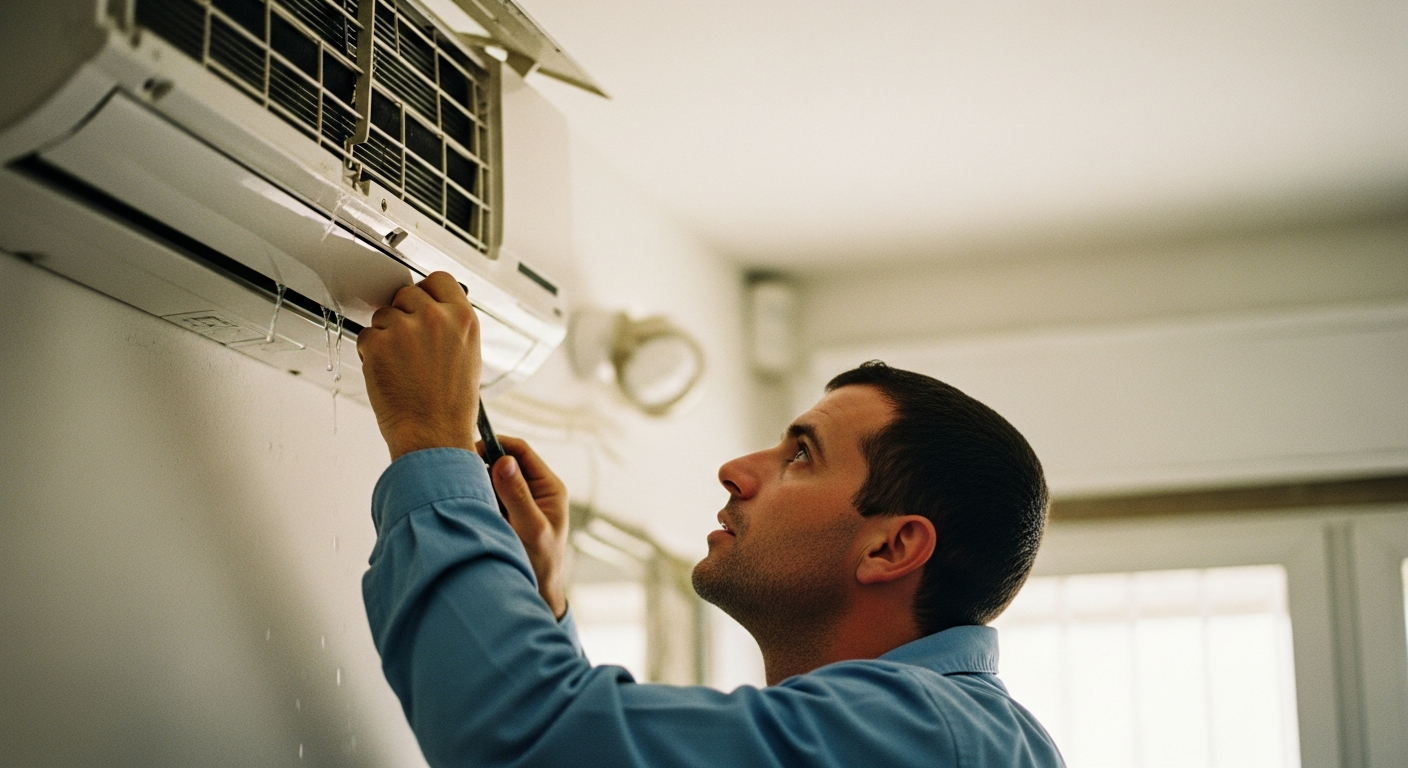
Treating a dripping air conditioner: The professional guide to troubleshooting, maintenance, and cleaning
The hot and humid Israeli summer makes the air conditioner our best friend and a must-have item in every home and office. But there is nothing more frustrating than suddenly discovering a puddle of water on the floor, or seeing water dripping directly from the air conditioner onto your wall, sofa, or electrical appliances. Treating a dripping air conditioner It is one of the most common calls to air conditioning technicians in Israel. The good news is that in many cases the problem can be solved independently, but sometimes the dripping is a warning light indicating the need for more in-depth maintenance, such as professional air conditioner cleaning.
In the comprehensive guide below, we will review all the possible reasons for water leaking from the air conditioner, provide practical steps for an independent solution, and explain why regular maintenance and deep cleaning are the key to a proper, healthy, and drip-free air conditioning system.
How does water form in an air conditioner and why does it drip?
To understand how to treat a dripping air conditioner, it is important to first understand how the air conditioner works. The air conditioner draws warm air from the room and passes it through the cooling coil (the metal fins behind the filters). The cooling action causes the moisture in the air to condense into water droplets, just like what happens outside a cold drink bottle on a hot day. This water accumulates in a special channel called a 'drain bath', and from there flows out through the drain pipe. When there is a malfunction in this process, the water will spill from the bath into the house.
The most common reasons for a dripping air conditioner
1. Clogged drain pipe (the most common cause)
In the vast majority of cases, treating a dripping air conditioner starts and ends with the drain pipe. Over time, dust, dirt, mold, and fungus build up inside the pipe, forming a kind of sludge or slimy material (biofilm) that blocks the free flow of water. When the water can't get out, it backs up into the drain pan and slides into the room.
2. Dirty filters and blocked battery
Another common cause is directly related to lack of maintenance. When the air conditioner filters are clogged with dust, the air flow to the cooling coil is impaired. As a result, the coil overcools and freezes, forming ice on it. When the air conditioner turns itself off (or when the compressor stops working), the ice quickly melts. The large amount of water at once overwhelms the drain pan, and the air conditioner begins to drip.
3. Lack of refrigerant gas
Just like with dirty filters, a lack of gas (due to a leak) changes the pressures in the system and causes the evaporator coil inside the house to freeze. The ice that builds up then thaws and causes a leak. If you have cleaned the filters and the air conditioner is still freezing, it is likely that there is a gas leak.
4. Cracked bathtub drain or slope problem
Older air conditioners can suffer from natural wear and tear, including cracks in the plastic drain pan. Additionally, if the air conditioner was installed unevenly or the slope of the drain pipe has become distorted over time (for example, due to the pipe moving outdoors), the water will not be able to drain properly under gravity.
Treating a dripping air conditioner: Steps for independent repair (do it yourself)
Before you rush to call a technician, there are a few simple steps you can take yourself to try and solve the problem:
- Step 1 – Cleaning filters: Open the front cover of the air conditioner, remove the filters and wash them thoroughly under running water. Dry them completely before putting them back in the air conditioner. It is recommended to do this once a month in the summer.
- Step 2 – Locating and unclogging the drain pipe: Go outside and find the end of the drain hose (a plastic, armored pipe, usually small in diameter). Make sure it is not kinked, blocked with dirt, or submerged in a bucket full of water. Blowing hard into the hose (or using a wet-dry vacuum) can loosen minor blockages of dirt.
- Step 3 – Check for ice on the battery: Open the front cover. If you see a layer of ice on the aluminum fins, turn off the air conditioner and switch it to fan only mode to defrost the ice. Wait until the ice melts completely.
The direct connection between treating a dripping air conditioner and professional air conditioner cleaning
Many people experience frustration when their air conditioner drips. They unclog the pipe themselves or call a technician to do it, but a few weeks later the drip returns. This is because unclogging the pipe treats the symptom, but not the root of the problem.
The root of the problem is the accumulation of mold, fungus, dust, and bacteria inside the drain pan and on the air conditioner coil. The constant humidity inside the air conditioner is an ideal breeding ground for the formation of thick biological 'sludge.' When a technician just blows through the hose, he pushes the dirt back into the pan, but in a short time the dirt will return and block the pipe.
The most complete and effective solution for treating a chronically dripping air conditioner is to perform Professional and deep air conditioner cleaning. This process includes:
- Dismantling the air conditioner plastic and the drain pan.
- Wrapping the air conditioner in a special cover to prevent household dirt.
- High-pressure water washing (Gernik) of the cooling coil and the booster (internal fan).
- Using dedicated antibacterial agents that dissolve mud, mold, and grease.
- Thoroughly rinse the drain pan and drain pipe.
Cleaning air conditioners not only completely solves the dripping problem, but also dramatically improves the quality of the air you breathe, eliminates bad odors, reduces electricity consumption, and extends the life of the air conditioner.
Price list: How much does it cost to treat a dripping air conditioner?
To help you out, we have compiled a table detailing the average costs in the Israeli market for repairing faults that cause water to drip from the air conditioner. Prices may vary depending on the area of residence, the time of day or night, the type of air conditioner, and the complexity of accessing the engine or pipe.
| Service type | Description of the operation | Estimated price range (₪) |
|---|---|---|
| Basic technician visit | Fault diagnosis and advice, without the need for spare parts or complex operations | 200 – 300 NIS |
| Unclogging a drain pipe | Clearing a minor blockage by blowing or pumping pressure from the tube | 250 – 350 NIS |
| Professional air conditioner cleaning (deep) | High pressure water flushing, chemical cleaning of the battery, drain pan and booster. Prevents drips and improves productivity. | 350 – 600 NIS (for overhead air conditioner) |
| Air conditioner gas refill | Treating a Freezing Problem: Basic Leak Detection and Standard Gas Filling by Weight | 350 – 600 NIS |
| Drain pump/float replacement | Relevant for concealed air conditioners or mini-central units without natural slope, including the part | 600 – 900 NIS |
When is it necessary to call an air conditioning technician?
While cleaning filters and straightening the end of the outside hose are simple tasks that anyone can and should perform, there are situations where treating a dripping air conditioner requires skill, professional tools, and expertise. We recommend calling a professional technician when:
- You cleaned the filters and the air conditioner still freezes and drips (strong suspicion of a lack of gas).
- The drain pipe runs inside the wall (internal preparation) and you do not have access to its end to unclog the clog.
- Water is dripping not only from the air outlet, but also from the back of the air conditioner, onto the wall, which may indicate a cracked bathtub or poor installation.
- If you smell a strong musty odor from the air conditioner along with the dripping – a clear sign that it needs to be replaced. Air conditioner cleaning Deep and fundamental to maintaining your health.
Summary and conclusions for the smart consumer
Treating a dripping air conditioner is not a fateful decision. In most cases, it is a matter of poor maintenance that leads to clogged drains or freezing of the coil. Making sure to wash the filters once a month is critical, but it does not replace the need for periodic deep cleaning. To keep the walls of your home dry, the air clean, and the air conditioner working at peak efficiency, incorporate a professional air conditioner cleaning service into your annual maintenance routine. This way, you will ensure a cool, pleasant, and leak-free summer.