


























Exterior House Painting: The Complete Guide to Renovating and Protecting Your Structure
The facade of your home is its calling card. Beyond its aesthetic and impressive appearance, Exterior house painting It is one of the most critical steps in maintaining the integrity of the structure, preventing moisture ingress and protecting it from the elements. In the State of Israel, where the sun beats down hard in the summer and the rains are heavy in the winter, the exterior walls are exposed to natural wear and tear, cracks, discoloration and peeling. Therefore, when we talk about Painting work Professionalism: Painting the building envelope is not just a matter of design – it is a necessary maintenance operation that requires knowledge, expertise, and the use of the most advanced materials on the market.
In this article, based on the rich experience of renovation contractors and building maintenance experts, we will detail in depth everything you need to know before you tackle an exterior painting project. From the meticulous preparation stages, to choosing the right type of paint for the climate conditions, to a professional cost estimate.
Why and when should you paint the exterior of your house?
Many tend to think of paint jobs as purely cosmetic, but in fact they have profound engineering and maintenance significance. Here are the main reasons why the building envelope should not be neglected:
- Protection against water ingress: Tiny cracks in the old paint can lead to rainwater seeping into the walls, which will cause internal dampness, mold, and damage to the frame's reinforcing steel.
- Thermal and acoustic insulation: Using modern paint systems, especially flexible paints with insulating properties, can help regulate the temperature inside the home.
- Increase in property value: A home that looks well-maintained and new on the outside maintains its value in the real estate market and attracts potential buyers or renters.
- Preventing plaster from crumbling: High-quality paint serves as a protective layer for the plaster and prevents it from crumbling as a result of exposure to UV rays and increased humidity.
Signs that it's time to renew the color
It is recommended to paint your home's exterior every 7 to 10 years, depending on where you live. However, if you notice the following signs, don't wait:
- The appearance of capillary cracks (as thin as a hair) or wider cracks on the plaster.
- Peeling paint or swelling (small bubbles indicating trapped moisture).
- Significant fading of the original shade due to sun exposure.
- Mold, fungus, or green spots on the exterior walls (very common in humid areas or on the north side of the house).
Work steps: How is professional exterior painting done?
Performing exterior painting requires a systematic methodology. Skipping one of the steps could lead to the project failing and the new paint peeling within a few months.
1. High pressure water washing (Gernik)
The first and most critical step is a thorough cleaning of the walls. Using an advanced water pressure washer, the contractor removes dust, dirt, soot, mold, and layers of loose, peeling paint. Painting over a dirty wall will prevent the new paint from adhering properly to the substrate.
2. Crack opening and concrete restoration
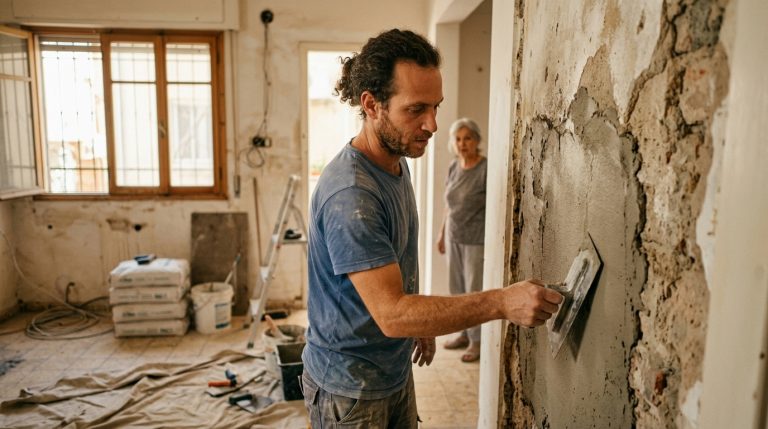
Once the wall is clean and dry, a comprehensive inspection is performed to detect cracks. Existing cracks are opened with a disc to allow for the introduction of a sealant. Flexible elastomeric fillers are used that are adapted to outdoor conditions. In cases of exposed and rusty iron, rust preventive treatment and professional concrete restoration should be performed before proceeding.
3. Applying a base coat (bonding primer)
The primer is the layer that connects the treated substrate to the top coat. The primer strengthens the substrate, reduces the wall's absorbency (which saves on expensive paint) and ensures maximum adhesion of the new paint. The type of primer should be matched to the type of top coat that will be chosen.
4. Painting stage (applying the top coat)
This is the stage where the house gets its final look. The paint is usually applied in two to three layers, according to the manufacturer's instructions. The painting can be done using special rollers for exterior work or by spraying using airless machines that ensure uniform coverage and deep penetration even for walls with rough textures (such as spray).
Choosing paint: flexible or acrylic?
When talking about painting an exterior house as part of advanced paint jobs, the main dilemma is often between standard acrylic paint and a flexible paint system.
Pressed acrylic paint
Enriched acrylic paints for exterior use provide excellent UV protection and are water-repellent. They are breathable (allow water vapor to escape) and relatively easy to apply. This solution is suitable for homes without significant cracking problems, smooth walls, or relatively new homes undergoing renovations.
Flexible paint system (elastomeric)
In older homes, or homes built in areas prone to ground movement, dynamic cracks often form. Flexible paint is actually a thick, viscous material that can flex and stretch. When the wall moves and creates a microscopic crack, the flexible paint layer stretches over its surface like a plaster and bridges it, thus preventing water from penetrating. Applying flexible paint is more complex, requires specific primer layers, and is more expensive than acrylic paint – but it provides peace of mind and perfect sealing for many years.
Professional price list: How much does it cost to paint an exterior house?
The cost of painting an exterior home varies depending on several factors: the size of the home, the condition of the existing walls, the type of paint chosen, and the method of work (whether scaffolding is required or can the work be done by rappelling/elevating platforms). We have compiled an average price list for you so that you can estimate the required budget:
| Type of work | Detailed description | Estimated price per square meter (₪) |
|---|---|---|
| Water pressure washing only | Thorough cleaning of facades before painting or to refresh the appearance, without restoration work. | 25 – 45 NIS |
| Acrylic painting including preparation | Washing, light crack treatment, primer and 2 coats of outdoor acrylic paint. | 80 – 130 NIS |
| Painting with a flexible paint system | Washing, opening and sealing cracks, a dedicated primer and application of an elastomeric and flexible paint system. | 130 – 180 NIS |
| Scaffolding addition | Cost of erecting and dismantling scaffolding for a standard project (a 2-story private house). The price is usually global or priced by area. | Approximately 3,000 – 6,000 NIS (global price) |
| Rappelling work | Painting work in towers or tall buildings without the possibility of scaffolding. Price calculated per meter. | An addition of 20% – 40% to the price per meter |
* The prices shown are for estimation only and do not include VAT. It is recommended to receive a detailed price quote after a contractor's field tour.
Tips for choosing a contractor for exterior paint work
An exterior home painting project is not the place to look for shortcuts. Choosing the wrong professional could cost you dearly next winter. Here are a few critical points to keep in mind:
- Registered contractor and insurance: Make sure the contractor has the appropriate license, and more importantly – insurance for work at height (whether it's scaffolding, lifting platforms, or rappelling) and third-party insurance.
- Detailed employment agreement: Don't settle for a verbal offer. The agreement must include a breakdown of all stages of the work: washing, scraping, opening cracks, applying primer, and the number of coats of paint. The brand and type of paint (e.g., Superkryl, Nirlat Extra, silicone, or flexible paint) must also be clearly stated.
- Responsibility A professional painting contractor will provide a warranty on the work (usually between 3 and 5 years for peeling and sealing, subject to the use of flexible and standard materials).
- Recommendations and previous projects: Ask to see homes that the contractor painted two or three years ago to see how the paint and sealant have stood the test of time and weather.
In conclusion
Proper investment in the process of Exterior house painting It will give your property a spectacular appearance, increase its value, and provide it with hermetic protection from natural disasters for many years. Remember that the quality of the work is measured in the preparation and sealing stages as much as in the application of the paint itself. Therefore, be sure to choose skilled professionals who are experts in performing complex exterior paint jobs, insist on materials with a standard mark, and be sure to have a well-organized work contract that guarantees you full compensation and peace of mind in the long term.