


























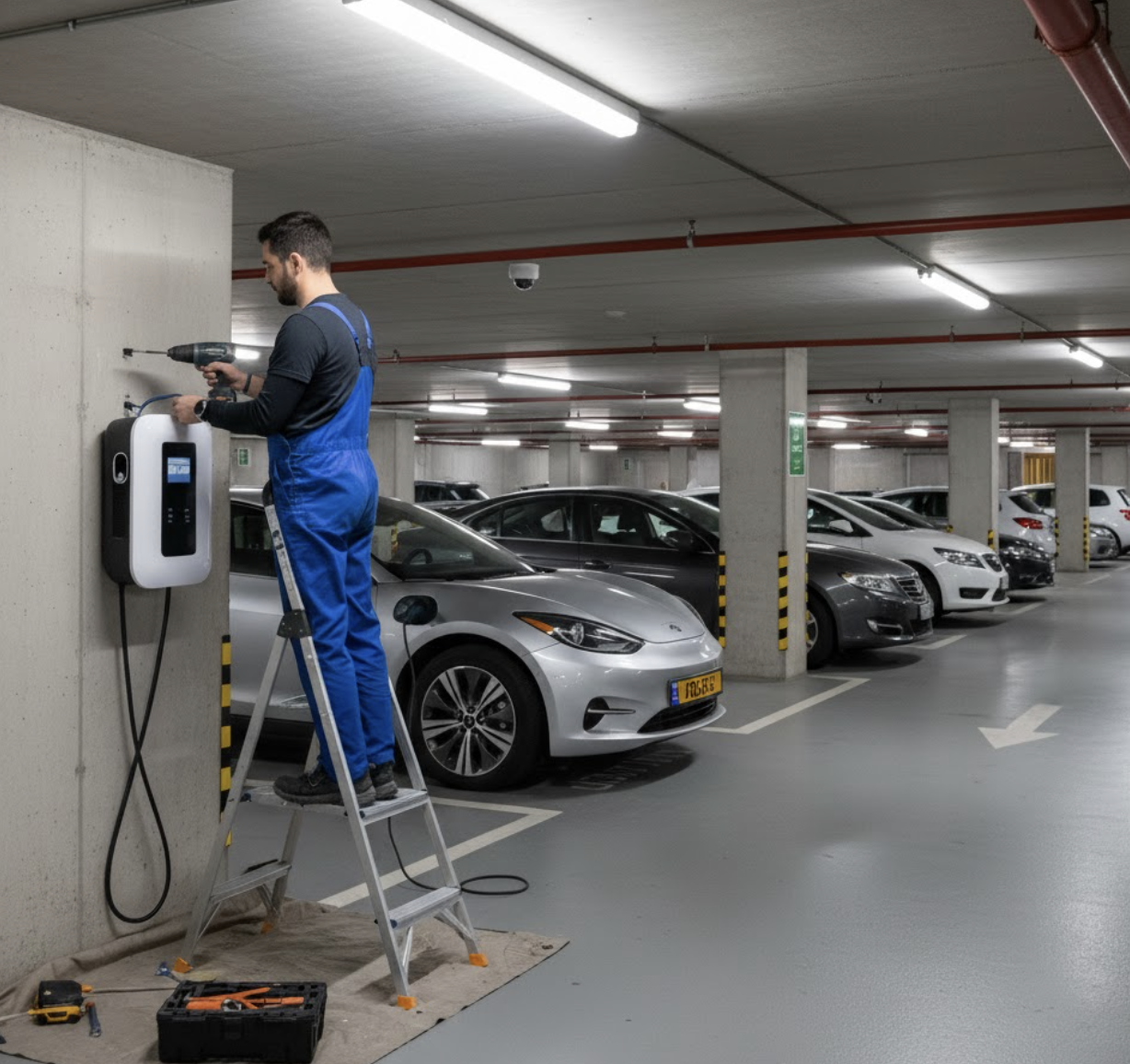
Did you buy an electric vehicle and live in a building? You're not alone.
You've purchased an electric vehicle. You're excited about the savings, the quietness, and the technology. But then comes the disturbing thought: "I live on the eighth floor. My parking lot is in minus 2. How the hell do I install a charging station there?""
This is the biggest question currently occupying owners of electric vehicles in condominiums. The good news: it is possible, legal, and there are organized solutions for this. The less good news: it requires professional planning, familiarity with the law, and most importantly – working with the building committee.
As project and infrastructure management experts at Avni Holdings, we manage dozens of such installations. We're here to explain exactly how to do it right, without headaches and without getting into arguments with the neighbors.
The challenge: Why is it more complicated in a shared house?
In a private home, installing a stand is relatively simple. In a condominium building, we encounter three main challenges:
- Shared infrastructure: The parking lot, the shafts (infrastructure ducts), the corridor walls, and the electrical rooms are all "common property." You can’t just drill and run cables on your own.
- The House Committee (and the neighbors): Any action on the common property requires consent. The house committee must approve the cable route, the location of the station, and ensure that the installation is safe and does not harm anyone.
- The question of billing (payment): Where does the station get its electricity from? From your private meter? From the building's public meter? This is a critical issue that must be resolved.
The two main ways to install a stand in a building
There are two legal and acceptable options for connecting a charging station in a shared building. Each has advantages and disadvantages.
Option A: Direct connection to your private electricity meter
This is the recommended and "cleanest" way in terms of accounting.
- How does it work? We pull a dedicated electrical cable directly from your private electrical panel in your apartment, through the building's shared shafts, to your parking lot.
- Advantages:
- Simple billing: All the electricity the station consumes is deducted directly from your electricity bill. No arguments with the committee.
- Full control: The position is yours, connected to your watch.
- Disadvantages:
- Technical complexity: This is the big challenge. Moving a cable from the 12th floor to the parking lot at Minus 2 requires complex work in threading cables through shafts, sometimes tens of meters long.
- Installation cost: Due to the complexity and distance, the installation cost (for the cable and labor) will be higher.
Option B: Connection to the common (public) electrical panel
When the first option is not feasible (huge distance, blocked shafts), it is possible to connect to the building's public electricity.
- How does it work? Connect to the building's main electrical panel (the one that powers the elevators and public lighting). but, So that you don't get charged by your neighbors, we install a "submeter" (a small private electricity meter) immediately after the connection.
- Advantages:
- Simpler and cheaper installation: Usually, the public electrical panel is close to the parking lot, and installation is faster and more economical with cables.
- Disadvantages:
- Arrangement with the committee: You will need to arrange a payment mechanism with the House Committee. The Committee will read your monthly/quarterly account balance and charge you accordingly.
- Dependence on the committee: Requires close cooperation and clear agreement from the committee.
What does the law say? (And what is the role of the House Committee?)
This is where you can relax. Israeli law (through the guidelines of the condominium inspector) recognizes the need and importance of charging stations.
The guiding principle: House Committee Cannot refuse unreasonable refusal At the request of a tenant to install a charging station at his own expense, as long as the installation meets the following conditions:
- The installation is performed by Licensed electrician only.
- The tenant presents to the committee Neat installation plan (cable route, location).
- The installation does not cause damage, a safety hazard, or serious aesthetic damage to the common property.
- All costs (installation, electricity, damages if any occur) apply to the requesting tenant.
This is exactly where "holding blocks" come into the picture.
Why is Avnei Akhakot the perfect solution for installation in a shared building?
Installation in a building is not a job for "diggers." It is a project that requires management, coordination, and expertise.
- We manage the project (One-Stop-Shop): We don't just install. We come, inspect the infrastructure, and provide you with a well-organized work plan.
- Full support with the House Committee: We prepare all the documents required by the committee for you: a professional plan, certified electrician certificates, and a letter of commitment to perform clean and safe work. We remove the committee's concerns.
- Creative technical solutions: With years of experience in building maintenance, we know exactly how to route cables through complex shafts in a clean, aesthetic, and hidden manner as possible.
- Safe installation only: All of our installations are performed by certified electricians and include all the necessary protections (such as a dedicated Type B circuit breaker) for the complete safety of you and your vehicle.
- Advanced billing solutions: We offer the installation of sub-meters or smart charging stations that enable consumption management and control.
In conclusion
Installing a charging station in a condominium is possible, legal, and correct. It requires careful planning, professional work, and proper conduct with the housing committee. Don't let the logistical challenge prevent you from enjoying the benefits of an electric vehicle.
Don't deal with this alone. Talk to the experts at Avni Holdings today and receive professional advice and full support for installing a charging station in your building – with peace of mind and complete confidence.