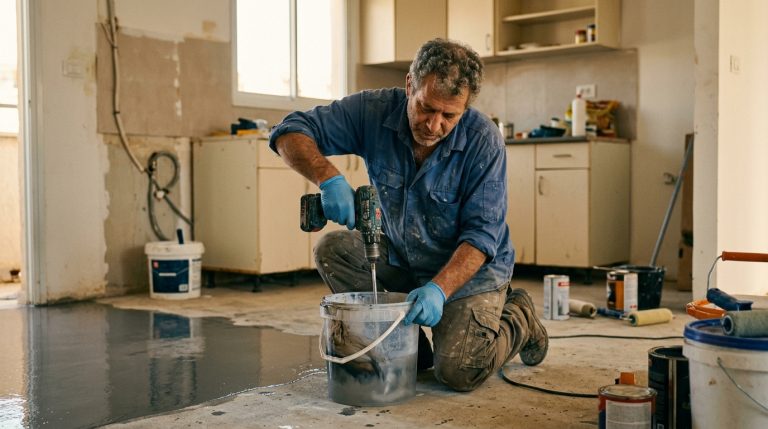




























Putty for wet rooms: Not every putty is suitable!
Bathrooms and kitchens are spaces with high humidity levels, which requires the use of materials that are particularly resistant to moisture and mold. Choosing the wrong putty can lead to peeling, cracking, and even water leaks.
What is important to know about putty for wet rooms?
- Moisture resistance: The putty should be moisture resistant and prevent water from penetrating the wall.
- Mold resistance: The putty should be resistant to the development of mold and fungus.
- flexibility: The putty should be flexible enough to handle slight movements in the walls and prevent cracks.
- Good adhesion: The putty should adhere well to various surfaces such as concrete, plaster, and blocks.
Types of putty for wet rooms:
- Acrylic putty: Water and mold resistant, suitable for indoor and outdoor use.
- Cementitious putty: Extremely resistant to moisture, suitable for spaces with high humidity such as showers.
- Epoxy putty: Resistant to chemicals and aggressive materials, suitable for use in industry and laboratories but can also be a solution for wet rooms in the home.
Tips for choosing putty for wet rooms:
- Consult an expert at a building materials store to choose the putty that best suits your needs.
- Read the manufacturer's instructions carefully before use.
- Make sure the wall is dry and clean before applying the putty.
- Use appropriate tools to achieve a smooth and uniform finish.
Remember, choosing the right putty for wet rooms is important to prevent moisture and mold problems in the future. Invest in choosing quality materials and professional work to enjoy long-lasting results.