

























Treating a dripping air conditioner: The complete guide to solving leaks and proper maintenance
The Israeli summer season is known for its intense heat and high humidity, making the air conditioner our best friend. But what happens when a puddle of water suddenly appears on the floor, or drops of water start dripping directly from the indoor unit onto the sofa or TV? Treating a dripping air conditioner It is one of the most common calls to air conditioning technicians in Israel. In the comprehensive guide below, we will explain in depth why this happens, how you can solve simple problems yourself, and why the real and long-term solution often lies in professional air conditioning cleaning.
Why is your air conditioner dripping? The most common reasons
To treat a dripping air conditioner most effectively, it is necessary to first understand the source of the problem. An air conditioner cools the air by passing warm air over a cold coil (the evaporator). This process creates condensation of moisture from the air, which turns into water. This water is supposed to drain out. When the system fails, water finds its way into the home. These are the main reasons:
1. Clogged drain pipe (cause number 1)
In most cases, the cause of the drip is simple: the drain pipe that carries the water out has become clogged. The blockage can be caused by a buildup of dust, dirt, insects that have entered the pipe from the outside, or even wasps that have built a nest in the opening of the pipe. When the water can't flow out, it backs up into the air conditioner's drain pan and spills into the room.
2. Accumulation of dirt, mold and fungus (related to air conditioner cleaning)
Another critical reason, which many people tend to ignore, is the internal cleanliness of the air conditioner. When the filters are dirty, dust enters the evaporator coil. The dust mixes with the condensation water and creates slimy sludge (biofilm) and mold. This sludge clogs the internal drain channels and the outlet of the drain pan. In such a situation, normal unclogging of the pipe will not help in the long run, and the only effective treatment is a service by Air conditioner cleaning Deep. This cleaning washes out all the mud and mold and restores water movement to its normal state.
3. Lack of gas and ice buildup
If there is a lack of gas in the air conditioning system, or there is an internal blockage in the gas pipe, the temperature of the evaporator coil drops below zero. As a result, the moisture freezes on the coil and a thick layer of ice forms. When the air conditioner turns itself off (or is turned on for ventilation), the ice melts very quickly. The large amount of water created in a short time floods the drain pan, which is unable to cope with the flow, and the water flows into the house.
4. Installation problems or poor slope
An air conditioner must be installed perfectly level or at a very gentle slope towards the drain. If the air conditioner is installed crookedly, or if the drain pipe rises up before it descends (creating a kind of water-trapping knee), the water will not be able to drain by gravity and will drip in. Also, in homes with a mini-central air conditioner installed, sometimes the water pump (which is responsible for pushing the water up to the sewer pipe) breaks down, which causes immediate flooding.
Treating a dripping air conditioner: What can you do yourself? (DIY guide)
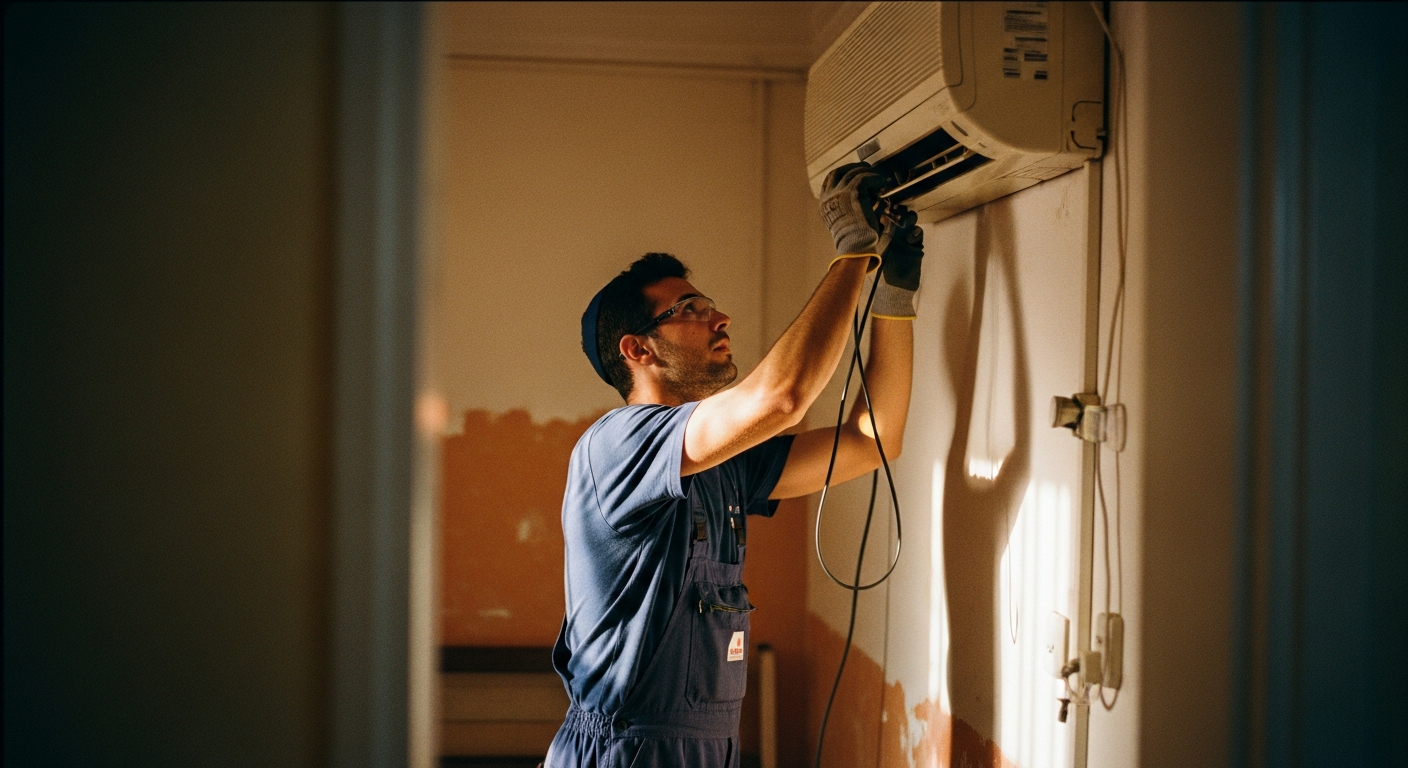
Before you rush to call a technician, there are a number of safe steps you can take yourself to try and treat a dripping air conditioner. Very important: Before any inspection or work, disconnect the air conditioner from the power supply to prevent the risk of electric shock!
- Cleaning the filters: Open the front cover of the overhead air conditioner, remove the meshes (filters) and wash them under running water. Dry them thoroughly and put them back in place. A clogged filter reduces air flow and can cause the air conditioner to freeze and leak.
- Checking the end of the drain pipe: Go outside to where the drain pipe is dripping. Is the end of the pipe blocked with mud? Is it submerged in a full bucket of water blocking the water outlet? Loosen the end of the pipe and make sure it is open to air.
- Easy exhalation to release blockage: If the pipe is accessible, you can try blowing hard into it (or using a wet-dry vacuum to suck out the dirt). This can loosen minor blockages of dirt or insects.
- Testing folded pipes: Sometimes the drain hose, which is made of flexible plastic, gets kinked or crushed behind furniture. Straighten the hose to allow free flow.
The direct and important connection between water leaks and professional air conditioner cleaning
As we mentioned, many customers are faced with a recurring problem of dripping. The technician comes, blows through the hose, collects payment, but after a month the air conditioner drips again. Why does this happen? The answer lies in the internal condition of the air conditioner. Over time, the interior of the air conditioner becomes a hotbed for the growth of mold, bacteria and fungus. The drain pan fills with a thick layer of biological sludge.
In such cases, the only treatment that solves the problem at its root is Air conditioner cleaning Professional. This service is performed by experts who wrap the air conditioner in a special cover and spray high-pressure water combined with special antibacterial agents. The cleaning process washes the evaporator coil, completely cleans the heat booster (fan), and polishes the drain pan. After a thorough air conditioner cleaning, the water can flow smoothly without interruption, the dripping problem disappears completely, and along the way you gain cleaner air, stronger cooling power and significant savings in electricity consumption.
How much does it cost to treat a dripping air conditioner? (Air conditioning service price list)
Repair prices vary depending on the source of the problem and the type of air conditioner (high-end, mini-central, multi-inverter, etc.). Below is a detailed table showing a cost estimate accepted in the Israeli market for treating a dripping air conditioner and related faults:
| Type of service/fault | Description of treatment | Estimated price range (₪) |
|---|---|---|
| Technician visit / simple unclogging | Arriving, diagnosing the problem and blowing into the drain pipe or releasing a slight blockage at the end of the pipe. | 250 – 350 NIS |
| Deep air conditioner cleaning (ceiling air conditioner) | Water and chemical pressure washing of the battery, booster, and drain pan. The ultimate solution to prevent chronic leaks and mold. | 400 – 600 NIS |
| Deep air conditioner cleaning (mini central) | Comprehensive treatment for the indoor unit hidden in a lowered ceiling, including disinfection and opening of water passages. | 700 – 1,200 NIS |
| Air conditioner gas refill | Basic leak testing and gas refilling (R410a or R32) in cases where the air conditioner freezes and drips due to lack of gas. | 350 – 600 NIS |
| Drain pump replacement | Mainly relevant to mini-central air conditioners or air conditioners installed in basements where upward suction is required. | 500 – 900 NIS |
| Slope repair or drain tub replacement | Partial disassembly of the air conditioner, rebalancing the unit or replacing a broken/cracked bathtub. | 400 – 800 NIS |
Frequently Asked Questions (FAQ) on Air Conditioner Leaks
Is a dripping air conditioner dangerous?
Yes. Combining water and electricity is a recipe for disaster. Water leaking from the air conditioner unit may reach the electronic control board, cause a short circuit, burn the air conditioner components, and even lead to a fire. In addition, water that drips over time may destroy walls, cause parquet to swell, and encourage the growth of dangerous mold in the walls of the house. Therefore, the problem should not be ignored and care should be taken to treat a dripping air conditioner as soon as possible.
The air conditioner is dripping outside the house, is this a malfunction?
Absolutely not. In fact, this is a sign that the air conditioner is working properly. The condensation process is supposed to remove water, and as long as the water drips through the drain pipe outside the house (or into the sewer/gutter system), the system is fine. The problem only begins when the dripping appears inside the house.
How often is it recommended to clean air conditioners to prevent dripping?
To keep your air conditioner in good working order, free of bad odors and dripping, the professional recommendation is to have it professionally cleaned (deep air conditioner cleaning) once a year to two years, depending on the frequency of use. Air conditioners that operate for long hours, especially in homes with pets or in areas with a lot of dust, will require cleaning more frequently.
Prevention: How to avoid water leaks in the future?
To save yourself the hassle and unnecessary service calls, adopt a maintenance routine. Be sure to pull out the filters and wash them every month or two during the summer and winter seasons. Always make sure that the external drain pipe is clean and not blocked by weeds or dirt on the balcony. And most importantly – don’t wait for bad smells or drips; order a service from Air conditioner cleaning As a preventative measure before the start of the hot season. Preventive maintenance will keep your air conditioner efficient, energy-efficient, and dry inside and out.
Summary
Treating a dripping air conditioner is not something to be put off. Whether it's a simple clog in the drain pipe that you can fix yourself, or a buildup of mold and mud that requires professional and thorough air conditioner cleaning, it's important to act safely and treat the source of the problem. Proper maintenance, regular cleaning of the filters, and maintaining a clean internal environment in the air conditioner will ensure a cool, dry, and worry-free summer. Always remember to disconnect the power before any action, and if necessary, don't hesitate to seek the help of a certified air conditioning technician.