
























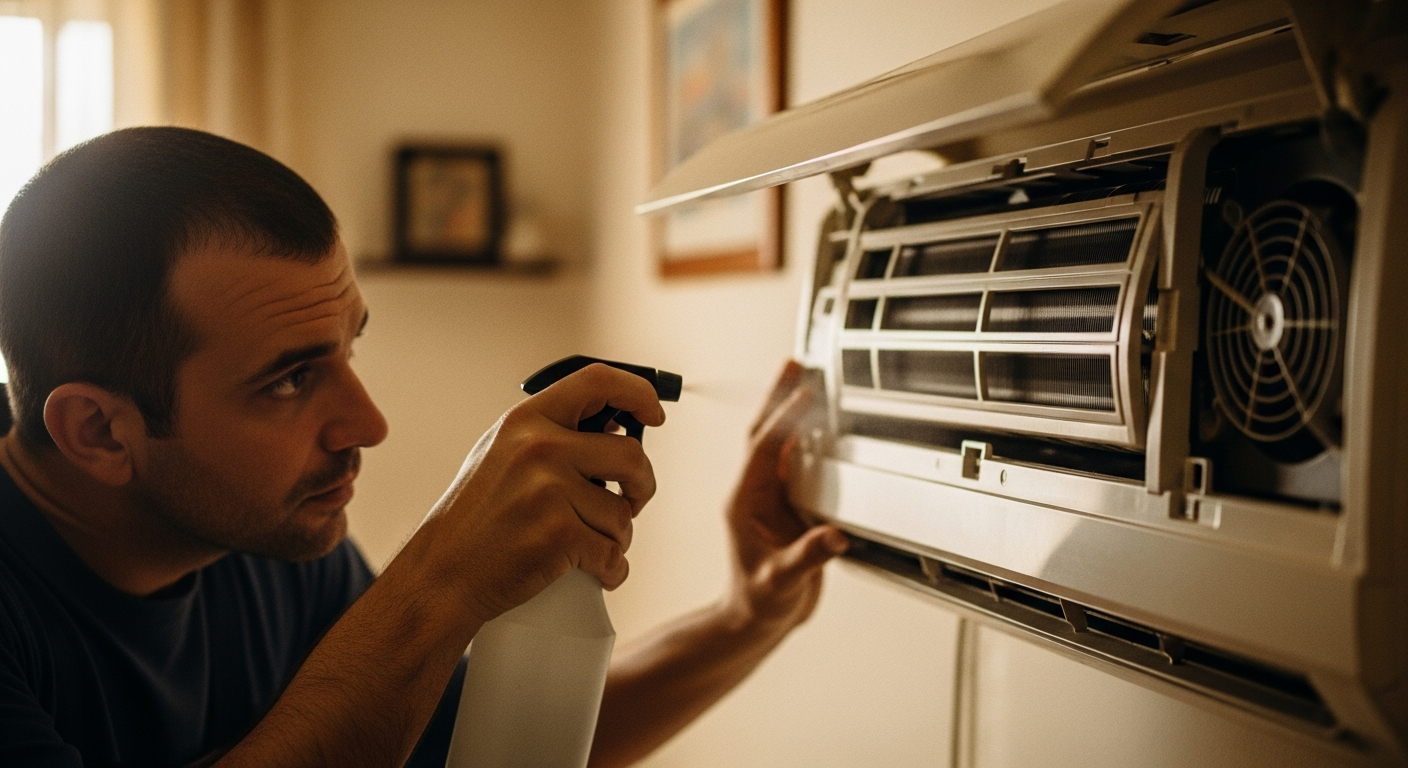
Air conditioner emits a bad odor? The complete guide to identifying, treating, and preventing odors
There's no more frustrating feeling than coming home on a hot summer day (or a cold winter day), turning on the air conditioner to enjoy the nice air, and suddenly discovering that Air conditioner emits a bad odor Which resembles the smell of mildew, mold, old socks, or even sewage. This phenomenon not only harms our quality of life and comfort inside the home, but may indicate real sanitary and health problems developing within the system.
As building maintenance and air conditioning service experts in Israel, we encounter this problem on a daily basis. In this article, we will detail in depth why the phenomenon occurs, how you can diagnose the source of the odor, and most importantly – why the most effective and safest long-term solution is to perform a professional and deep air conditioner cleaning. The guide is based on practical experience and is specifically adapted to the Israeli climate, which is characterized by high humidity that contributes greatly to the problem.
Why does an air conditioner smell bad? The main reasons
To understand the root of the problem, it is important to know how an air conditioner works. The air conditioner draws air from the room, cools or heats it, and returns it inside. During the cooling process, a lot of moisture is created on the evaporator coil (the inside of the air conditioner). The combination of constant humidity, complete darkness, and dust sucked from the room creates the perfect breeding ground for a variety of problems.
1. Accumulation of mold, fungi, and bacteria
This is the most common reason why an air conditioner gives off a bad smell. Mold spores and bacteria thrive in the damp, dark environment inside the plastic parts, on the cooling coil, and on the air booster (the air conditioner's fan). When the air conditioner is running, the air passes through these mold colonies, absorbing the pungent odor and spreading it throughout the house. Beyond the bad smell, this is a serious health hazard.
2. Dirty and clogged filters
The function of filters is to filter dust and particles suspended in the air before they reach the internal system. When filters are not cleaned regularly, the thick layer of dust turns into a damp, spongy mass that begins to rot and emit a bad odor. Clogged filters also strain the air conditioner and cause increased electricity consumption.
3. Drainage system problems and blockages
The water that forms during the condensation process is supposed to drain out through the drain pipe. When the pipe becomes clogged (due to dirt, insects, or algae), the water accumulates in the air conditioner's 'drain pan'. Stagnant water quickly starts to stink, leading to a smell reminiscent of sewage or muddy water that wafts straight into the room.
4. Insect or rodent carcasses
Although this is a less common scenario, it does happen quite a bit in our country. Geckos, cockroaches, or even small mice may find their way into the ducts of the air conditioner or indoor unit, die there, and cause a pungent and unbearable smell of decay when the device is turned on.
Types of odors: What is your air conditioner trying to tell you?
Characterizing the type of odor can help you understand the exact problem and act accordingly:
- Smell of mold, mildew or 'old socks': Unequivocally indicates the presence of fungi, bacteria, and mold inside the indoor unit. Requires deep air conditioner cleaning and disinfection.
- Smell of sewage or garbage: It usually indicates a buildup of stagnant water due to a blockage in the drain pipe, or the penetration of odors from a drain pipe connected directly to the home sewage system without a proper siphon.
- Smell of burning plastic or smoke: Danger! This is a sign of an electrical problem, a short circuit, or an overheating component inside the air conditioner. Turn off the air conditioner immediately, unplug it, and call a technician.
- Smell of decay or carrion: Probably indicates an animal carcass within the system.
The connection between bad odor from the air conditioner and family health
It is important to understand that if an air conditioner emits a bad smell of mold, the problem is not only aesthetic. When we breathe air that has passed through filters and evaporators infected with mold, we introduce mold spores and bacteria into our lungs. This phenomenon is known in the professional world as 'sick building syndrome' and can cause a number of health effects, including:
- Worsening of allergies and asthma, especially in children and the elderly.
- Irritations in the eyes, nose and throat.
- Chronic headaches, unexplained fatigue and cough.
- Respiratory tract infections in cases of criminal neglect of the system.
Precisely for these reasons, the only solution that guarantees clean air and a safe environment is a professional air conditioner cleaning service once in a while.
What can you do on your own to try to solve the problem?
Before calling a professional, there are several basic maintenance tasks that you should perform yourself:
- Cleaning the filters: Open the front cover of the air conditioner, remove the filters, and wash them thoroughly under running water. Dry them completely in the shade before returning them. This operation should be performed once every month or two.
- Checking the end of the drain pipe: Check that the end of the hose that comes out is not blocked by mud, leaves, or insects. Make sure that the water can drip freely.
- Activating ventilation mode (Fan): Run the air conditioner on ventilation only mode at maximum power for about half an hour. This helps dry out the moisture that has accumulated on the evaporator coil and may reduce slight musty odors.
When is it necessary to order a professional air conditioner cleaning service?
If you have cleaned the filters and the air conditioner still smells bad, this is a clear sign that mold and dirt have penetrated deep into the internal parts of the air conditioner: the evaporator coil, the drain channels, and the air booster. You cannot access these areas without disassembling the air conditioner, and any attempt to spray household cleaning agents inside may cause irreversible damage to the electronic board and even pose a risk of electric shock.
Professional and deep air conditioner cleaning Includes a thorough process of several steps:
- Dismantling the plastic casing of the internal air conditioner to gain full access to the affected parts.
- Wearing a dedicated 'drain apron' on the air conditioner to protect the walls of the house from water and dirt.
- Spraying professional antibacterial materials that dissolve mold, grease, and stubborn dirt without damaging the metal of the cooling coil.
- A thorough rinse using a high-pressure water washer (Gernik), which flushes out all the mold spores, bacteria, and dirt directly into the drain bucket. The result is black water that proves exactly what you've been doing so far.
- Careful drying and final disinfection to prevent the mold from returning over time.
Price list for air conditioner cleaning and odor treatment services
To give you a clear picture of the costs involved in solving the problem, we have prepared a table showing the price ranges accepted in Israel for various air conditioner cleaning services. Prices may vary depending on the complexity of accessing the air conditioner and the level of dirt.
| Air conditioner type/service | Description of professional treatment | Estimated price range (₪) |
|---|---|---|
| Overhead air conditioner (up to 2.5 kW) | Deep cleaning and water pressure washing, including dismantling plastics, washing the accelerator, battery and drain bath + anti-mold disinfection. | 350 – 550 NIS |
| Overhead air conditioner (3 HP and above) | Deep cleaning and high-pressure washing for large units, including full antibacterial disinfection. | 450 – 650 NIS |
| Mini central air conditioner | Washing the evaporator coil, cleaning the internal drain channels, replacing central filters (not including cleaning threads). | 600 – 1,200 NIS |
| Preventive care and basic disinfection | Using disinfectant tablets, antibacterial spray and cleaning filters (without water pressure and massive disassembly). | 150 – 250 NIS |
Tips from professionals: How to prevent the air conditioner from stinking in the future?
After you have thoroughly cleaned the air conditioners and the air in your home is clean and fresh again, we recommend adopting a number of habits that will prevent the return of mold and bad odors:
- Proactive drying of the air conditioner: One of the best-kept secrets of air conditioning technicians! Before you turn off the air conditioner after a cooling operation, switch it to ventilation mode (a mode where only the fan works without the compressor, usually indicated by a fan icon) for 10 minutes. This will dry out the moisture in the coil and prevent mold from developing.
- Filter cleaning routine: Don't wait for the air conditioner to remind you that it's having trouble breathing. Set a regular reminder on your mobile phone to wash the filters once a month.
- Leaving a window open in the summer: Completely sealed spaces encourage the development of stagnant air and fungi. It is recommended to leave a small slit in the window to allow minimal air exchange.
- Annual maintenance: Call a professional company that provides air conditioner cleaning services once a year (preferably at the beginning of the summer season) to perform a thorough wash, just as you take your vehicle to the garage for annual maintenance.
In conclusion
when Air conditioner emits a bad odor, it is much more than a mere aesthetic nuisance. It is a warning sign that the air you and your family breathe is contaminated with mold, bacteria, and organic dirt. Home maintenance of the filters is important, but it is not a substitute for root cause treatment. Air conditioner cleaning Professional, which includes water pressure washing and deep disinfection, will give your air conditioner new life, reduce electricity consumption, and ensure you have clean, healthy, and fresh air over time.