

























Exterior painting for a private home: The comprehensive guide to renovation, sealing and maximum protection
Every property owner comes to a moment when they look at the facade of their home and realize it's time for a change. Painting the exterior of a private home is much more than an aesthetic project aimed at improving the appearance of the structure; it is a critical maintenance operation that provides a necessary protective layer against the elements, prevents moisture from penetrating, and maintains the integrity of the skeleton over the years. In the context of professional painting work, contractors and experts refer to the exterior shell as the 'skin' of the home, and as such, it must be flexible, durable, and waterproof.
In the Israeli climate, characterized by scorching sun in the summer and heavy rains in the winter, exterior walls suffer significant wear and tear. Paint fades, cracks develop, and plaster begins to fall off. In the professional guide before you, we will dive deep into everything you need to know before you get started: from the preparation stages, to choosing the most suitable materials, to a detailed price list that will help you plan your budget wisely.
Why should you not neglect exterior painting for a private home?
Many people tend to think of paint jobs in terms of interior design only, but the exterior requires much more professional and meticulous attention. Here are the main reasons why it is important to invest in painting the facades:
- Protection against weather damage and moisture: The Israeli sun dries the walls and causes the material to shrink, while the winter rains look for every little crack to penetrate. A quality exterior paint system acts as a sealant for everything.
- Preventing the development of deep cracks: Hairline cracks (minor) that are not treated in time will expand over time and lead to water penetration into the reinforcing iron of the frame. Iron that rusts swells and causes explosions in the concrete (corrosion).
- Increasing the value of the property: A well-maintained home with a clean, modern, and well-painted facade is worth more in the real estate market. First impressions start from the street.
- Energy saving Using bright, specialized colors that have the ability to reflect light (reflectivity) can reduce the heating of walls in the summer, and consequently reduce air conditioning costs.
Work steps: How do you professionally paint an exterior?
Painting the exterior of a private home is completely different from painting a wall in a living room. Exterior painting jobs require extensive technical knowledge, safety equipment, and most importantly – thorough preparation of the infrastructure. A contractor who skips the preparation stage and rushes to apply paint is quickly dooming the project to failure. Below are the necessary steps in professional work:
1. Preparing the area and organizing
Before starting work, it is necessary to erect scaffolding (depending on the height of the structure) or use rappelling equipment/elevating platforms. At the same time, it is necessary to thoroughly protect all elements that are not intended for painting: windows, doors, external pipes, balcony and garden flooring. Thorough protection using thick nylon and high-quality adhesive tape will save hours of laborious cleaning later.
2. High pressure water washing (Gernik)
Exterior walls accumulate soot, dust, hard dirt, greenness and sometimes mold over the years. Applying paint to a dirty wall will prevent the paint from adhering to the substrate (poor adhesion). All facades of the house should be washed with high water pressure and the walls allowed to dry completely.
3. Peeling off loose layers and treating exposed iron
Any loose plaster or paint should be scraped off using Putty Strong or a hammer. If rusty iron parts are discovered (due to concrete blasting), it is necessary to carve around them, sand the rust and apply a rust converter and anti-corrosive protective paint before closing the hole with rehabilitation concrete.
4. Sealing cracks and smoothing the wall
This is the most important step to ensure the durability of the structure. Capillary cracks will be treated with flexible putty or polyurethane sealants (such as Sikaflex). Deeper cracks, defined as dynamic cracks, require widening the crack, filling it with sealant, and embedding an Interglass mesh that will prevent the crack from reopening with natural structural movements.
5. Applying primer (bonding material)
The primer (binding agent) strengthens the existing substrate, unifies the wall's absorptions, and ensures that the final paint adheres perfectly and does not peel. The type of primer will be chosen depending on the type of paint or coating that will follow (for example, Primer X or Primer for Finishing).
6. The painting or coating stage
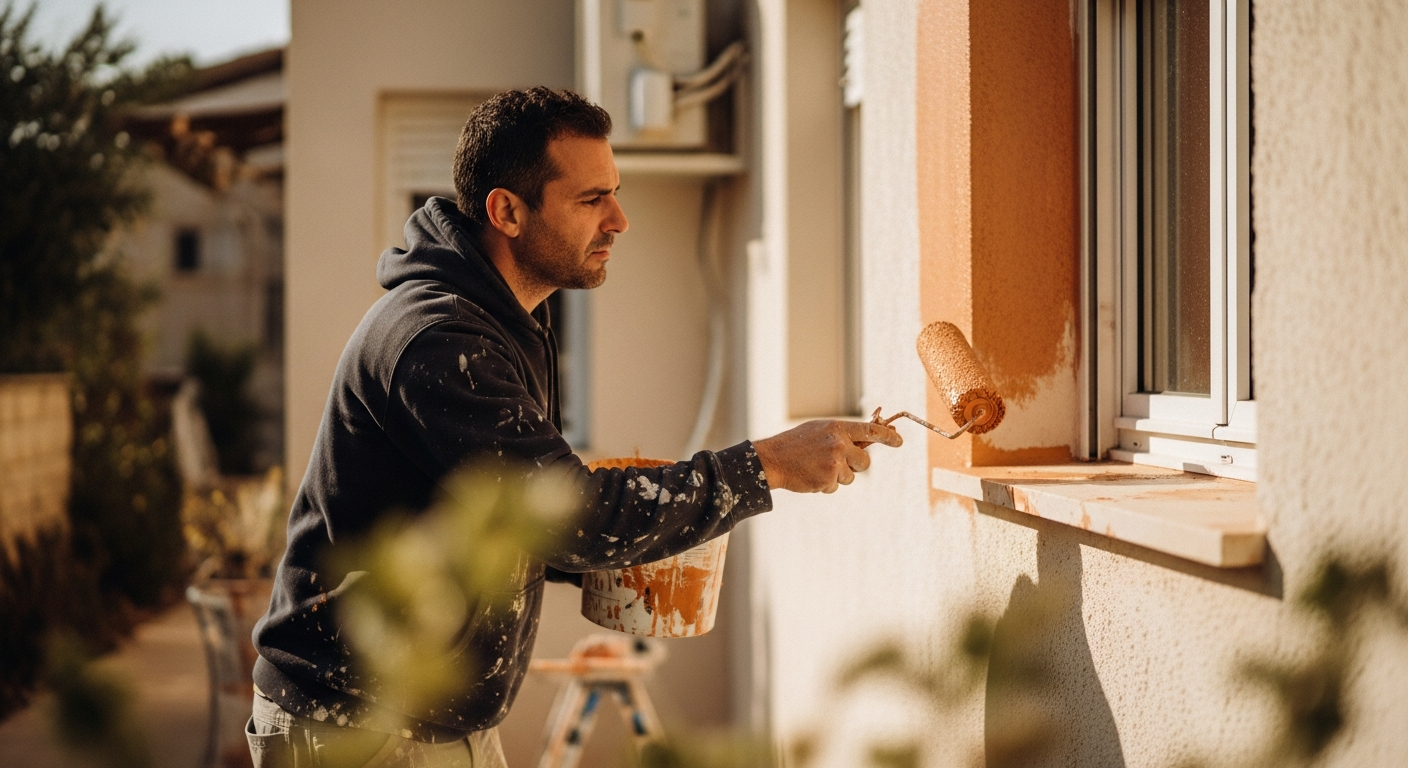
Applying the layers of paint or coating, usually in two to three layers, while ensuring full drying times between layers. Quality paint jobs are carried out using dedicated outdoor rollers, brushes, or airless paint spraying, depending on the desired texture.
Recommended types of paints and coatings for exterior walls
When planning exterior painting for a private home, the material must be adapted to the condition of the wall, the geographical area, and the budget. These are the leading options on the Israeli market:
- Exterior acrylic paint: Water-based paint, breathable, resistant to outdoor conditions and washable. Suitable for walls in relatively good condition that do not have many cracks. Its great advantage is its affordable price and ease of application.
- Flexible color system: This is the ideal solution for homes suffering from cracks. Flexible paint (such as Supergamish) is able to stretch and bridge cracks of up to 2 mm. It serves as an excellent sealant, but requires precise work and roller application to create a texture that hides defects (orange or smooth texture).
- Colored finish (acrylic or mineral): A coating with a rough texture (natural stone, rustic, etc.). The finish provides an especially thick layer of protection, bridges small cracks, and gives the house a luxurious, modern look. Working with finish is considered more expensive and requires great skill on the part of the plasterer/painter.
Price list: How much does exterior painting cost for a private house?
The cost of exterior painting varies depending on several factors: the size of the house (envelope area in square meters), the condition of the existing walls, the complexity of access (the need for scaffolding or a crane), and the type of material chosen. In the following table, we have compiled an average price list and cost estimates accepted in the market (prices refer to square meters and do not include VAT):
| Type of work/material | Service description | Estimated price range (per square meter) |
|---|---|---|
| Painting with exterior acrylic paint | Washing, light putty repairs, primer and 2 coats of acrylic paint | 70 – 120 NIS |
| Flexible color system application | Pressure washing, thorough crack treatment, dedicated primer and 2 coats of flexible paint | 100 – 160 NIS |
| Applying colored topcoat | Washing, plaster repairs, application of a bonding primer, and application of colored topcoat in a texture of your choice | 150 – 250 NIS |
| Renewal of an existing contract | Water pressure cleaning, primer and painting with a dedicated paint to renew the finish (without scraping the old finish) | 80 – 140 NIS |
| Extra for scaffolding | Erection, rental and dismantling of peripheral scaffolding for a standard house (2 floors) | An additional 30 – 60 NIS per square meter |
Important note: The larger the area of the house, the lower the relative price per square meter will usually be. Always ask for a detailed, written quote after a contractor tours the area.
The ideal time to carry out the project
Timing is critical when it comes to exterior painting a private home. The most recommended seasons for exterior painting in Israel are the transitional seasons – spring (April-June) and fall (September-November). In the hot summer, materials may dry too quickly and lose their elasticity or crack before they set. In winter, rain and high humidity will prevent the paint from drying and will damage the adhesion of the material to the wall. Therefore, plan the project in advance and reserve a contractor for the transitional seasons.
How to choose a recommended contractor for exterior paint work?
Entrusting the facade of your home to unprofessional hands can lead to serious financial and aesthetic damage. To ensure a perfect result that will last for many years, follow these rules when choosing a professional:
- Proven experience in foreign work: Make sure the contractor specializes in exterior painting and facade restoration, not just interior painting. Ask to see previous work, preferably done several years ago, to see how the work will stand the test of time.
- Licenses and insurance: Painting a private home often involves working at height (on high ladders, scaffolding, or elevated platforms). It is essential to ensure that the contractor and his employees have a valid work at height permit, as well as a third-party insurance policy and employers' liability insurance that covers any damage or injury on site.
- Detailed employment agreement: Don't settle for a verbal quote. The agreement must include the exact material specifications (including manufacturer names and models), preparation steps, project completion schedules, and contractor warranty (it is usually customary to give between 3 and 5 years of warranty on peeling and cracking).
- Ensuring the quality of materials: Make sure that the contractor uses materials with a standard label that are adapted to the Israeli climate, such as Tambor, Nirlat or equivalent products, and that he applies them according to the manufacturer's instructions (correct dilution, waiting times).
Routine maintenance after painting
After you have invested the best of your money and time in an exterior painting project for a private home, proper maintenance will keep the fresh look for years. It is recommended to wash the walls once a year using a regular garden hose (without too much pressure) to remove dust and soot that accumulates on them. In addition, it is recommended to tour around the house once a year, preferably before winter, to locate new small cracks. Spot-sealing a small crack quickly will prevent water ingress and save the need for extensive renovation in the future.
Summary
Exterior painting of a private home is a significant project that gives your home new life, a luxurious appearance and critical protection against natural damage. By understanding the stages of the work, becoming familiar with the different materials (such as flexible paint or colored putty), and making an informed choice of a contractor who specializes in exterior painting, you can ensure that your investment will bear fruit for many years to come. Remember: the secret to success lies in preparing the foundation and sealing the cracks – do not compromise on these steps for the sake of temporary savings, as the cost of repairing moisture damage will be much higher.