


























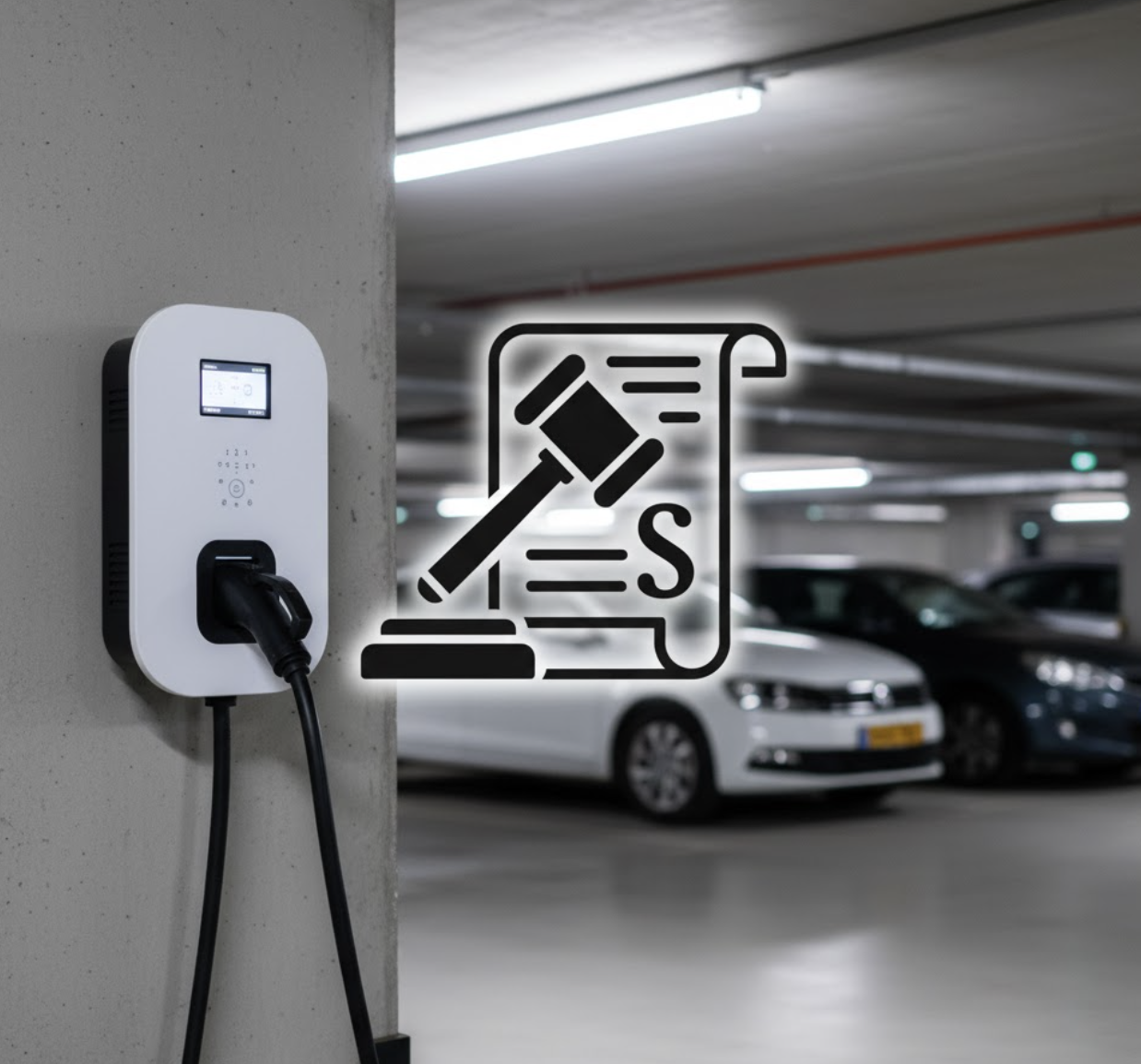
: Electric vehicle in a condominium building? The law is on your side!
One of the biggest barriers to switching to an electric vehicle for residents of apartment buildings is the fear of dealing with the building committee. "Am I allowed to install one?", "Can the neighbors object?", "What will happen if the committee refuses?".
We are inStones Holdings We hear these questions every day. Therefore, it is important for us to get things in order: Yes, the law is on your side.
In 2022 it came into effect Amendment 33 to the Land Law, known as the "Charging Station Law." The purpose of the law is simple: to make it easier for tenants to install private charging stations in their parking lots, and to limit the power of the house committee to refuse the request.
So that you can come prepared, we have summarized for you the main points of the law and how it affects the installation process.
1. The main points of the law: What do you deserve?
The guiding principle of the law states:
An apartment owner in a condominium who has parking adjacent to his apartment (registered in the land registry) or private parking located on the common property is entitled to install a charging station in this parking lot. The housing committee cannot refuse the request, except under very specific conditions.
However, the law distinguishes between two types of regulations, and this is the most important point to understand:
2. The critical distinction: "normal position" versus "non-normal position""
The scope of the House Committee's authority depends on the type of position you wish to install.
A. Installing a "regular position" (the fast track)
- What is a "normal position"? This is a single-phase position (common power up to 7.4kW), which Connected directly to your apartment's private electrical panel.
- What is required of you?
- To notify the House Committee In writing You intend to install the stand.
- Attach a basic installation plan and details of a qualified electrician who will perform the work to the message.
- What is the authority of the committee?The committee cannot refuse this request. His authority is limited to determining Reasonable conditions To perform the installation, such as:
- Requirement that the work be performed only by a certified electrician (our basic requirement at "Maintenance Buildings").
- Coordination of working hours to prevent nuisance.
- Determining the route of the cable in the common property (in shafts, in canals) in a way that does not harm aesthetics or safety.
- Your obligation to repair any damage caused to the common property during installation.
The bottom line: In a normal position, the committee does not approve – it only supervises the process.
B. Installing an "unusual position" (requires consent)
- What is an "unusual position"? Any other position. Usually it is one of two cases:
- Three-phase position (For faster loading).
- A position (of any kind) which Connects to the public/shared electrical panel of the building.
- What is required of you? In this case, you are required to receive the The express consent of the House Committee.
- Why is consent required? Because such an installation affects all tenants. It may overload the shared electrical infrastructure (which powers elevators, lighting, etc.), and it requires a billing solution (installation of a submeter) so that you do not charge your neighbors for your electricity.
- What is the authority of the committee? Here the committee has the right to refuse, but the refusal must be reasoned and reasonable (for example: if the building's electrical infrastructure is unable to withstand the load).
3. Your duties as a position holder (according to the law)
Whether this is a regular position or not, the law imposes a number of clear obligations on you:
- Certified electrician: Installation must be performed by a qualified electrician only.
- Carrying costs: All costs, without exception, apply to you. This includes:
- Purchase of the stand and installation.
- Cost of materials (cables, ducts, circuit breakers).
- The cost of electricity consumption (via the private meter or sub-meter).
- The cost of repairing any damage caused to the common property during the work.
- maintenance: You are responsible for the correctness of the position and for ensuring that it does not pose a safety hazard.
4. Why choose Holdings Stones to manage the process?
As you can see, the law is simple, but the bureaucratic process with the house committee can be complex. The last thing you want is a dispute with neighbors over the cable route.
This is where we come into the picture.
Avni Holdings is not just an installation company – we are an infrastructure project management company. We manage the process for you from end to end:
- Accompanying the committee: We prepare a neat "project file" for you to submit to the committee, which includes a professional installation plan, a planned route for routing the cables (in the most aesthetic and hidden way), and certificates from a certified electrician.
- Common language: We speak "the language of the committee." We address their concerns about safety, congestion, and visibility, and present professional solutions.
- Accounting solutions: In installations that require connection to the public meter, we install standard submeters and provide the committee with a simple billing solution.
- Clean and safe execution: Our teams are experienced in working in occupied buildings, and perform clean, aesthetic work in accordance with all strict safety standards.
In conclusion
Israeli law encourages the installation of charging stations and protects your right to do so. Don't let fear of bureaucracy stop you.
Contact the experts at Avni Holdings today. We will take care of the entire process – from submitting the plan to the committee to the moment you connect the vehicle to electricity in your private parking lot.