


























The electric vehicle is here. Now we have to choose how to "fuel" it.
The automotive world has changed. Instead of gas stations, we look for outlets. But when we approach choosing a home charging solution, we encounter a flood of technical terms: kilowatts, single-phase, three-phase, Type 2, smart station, and more.
Which charger is right for your car? Is the one that came with the car enough? And what is the difference between a portable charger and a fixed stand?
בStones Holdings, We don't just install – we're here to get you organized, help you choose the right charger, and make sure it's installed in the safest way possible.
Types of electric vehicle chargers: What are the differences?
It's important to understand: The device you buy and install on the wall is actually a smart "power supply" (EVSE). The real "charger" is inside the vehicle itself. The role of the external station is to deliver electricity in a safe and controlled manner.
There are three main types of home charging solutions:
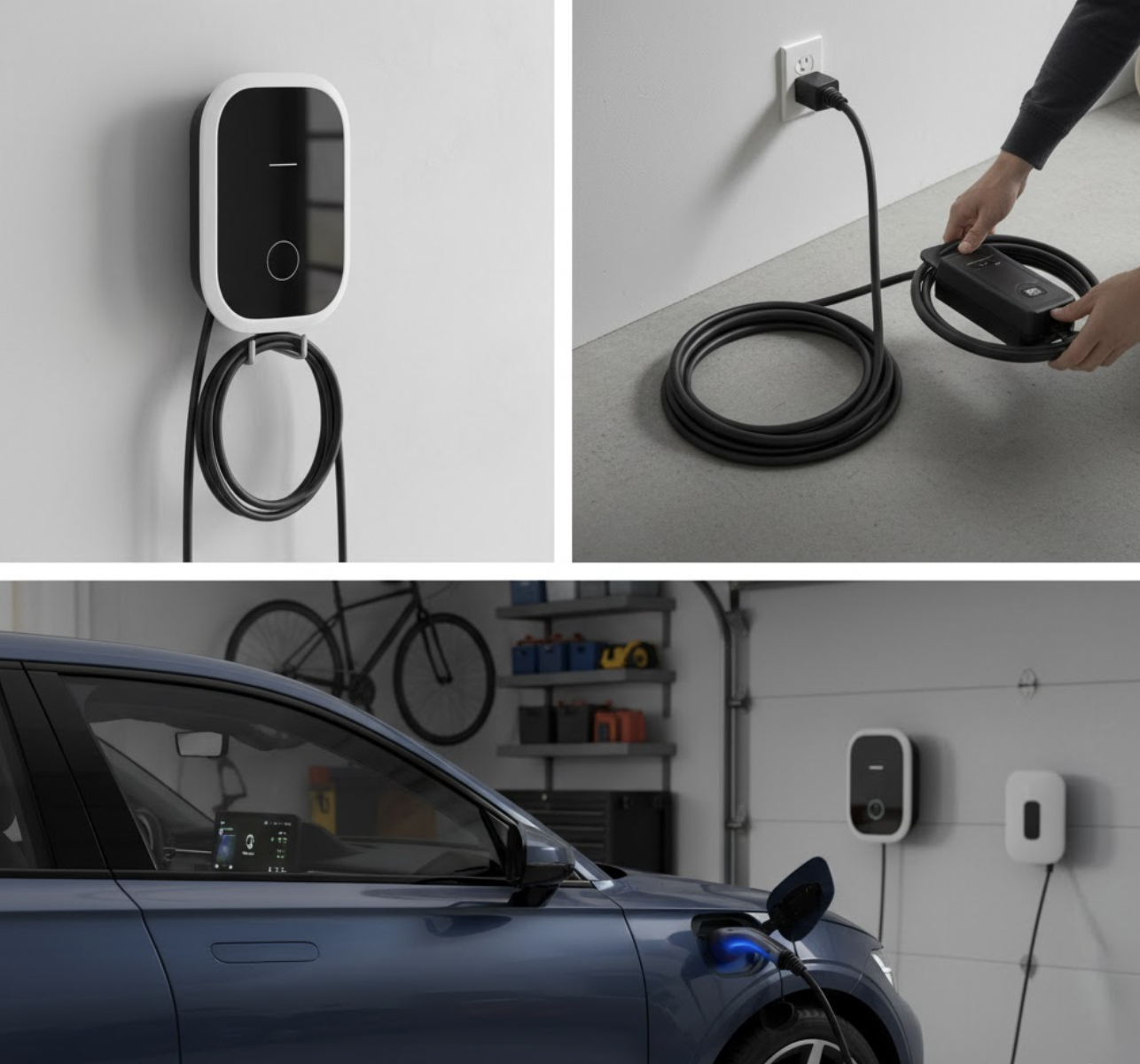
1. Basic charging cable ("grandma cable") – Mode 2
This is the cable that usually comes with the vehicle from the importer.
- How does it work? One side for the car, the other side for a standard household outlet.
- speed: Very slow. A full charge can take a whole day.
- Who is this suitable for? For emergency use only, or for small plug-in vehicles. Not recommended for regular daily use in a fully electric vehicle due to the strain on the home outlet.
2. Fixed charging station (Wallbox) – Mode 3 (Most recommended)
This is the box that is permanently mounted on the wall in the parking lot.
- How does it work? Connected via a direct, dedicated line to the home electrical panel.
- speed: 5 to 8 times faster than a regular outlet (depending on infrastructure).
- Who is this suitable for? For every husband Electric vehicle Who wants comfort, safety and full charging during the night.
3. Industrial portable charger
An intermediate solution. This is a charger that is not fixed to the wall, but connects to an industrial power outlet (red socket).
- Who is this suitable for? For people who live in rentals, move between apartments, or need a fast charging solution that can be taken in luggage.
How do you choose a charging station (Wallbox) for your home?
The market is flooded with brands. To make the right choice, you need to pay attention to 3 critical parameters:
A. Charging power (how fast will it charge?)
Most home stations come from two main suppliers:
- Single-phase (7.4kW): Suitable for homes with an older electrical connection (25 or 40 amps) or for vehicles that do not support faster charging.
- Three-phase (11kW or 22kW): The new standard. Allows for faster and more efficient charging. Requires a three-phase connection at home.
Our tip: Even if your vehicle only supports single-phase, it is recommended to install a three-phase outlet in preparation for the future (if the infrastructure at home allows).
B. Built-in cable or socket?
- Built-in cable (Tethered): The cable is permanently connected to the stand. The most convenient way is to simply pull it out and connect it to the car.
- Socket only: The stand only comes with a "hole", and you need to bring your own cable. Looks more aesthetically pleasing and cleaner when the stand is not in use, and prevents vandalism of the cable.
C. A "stupid" versus a "wise" stance"
- Basic position: Does the job – connects and charges. Simple and reliable.
- Smart position: Connects to WiFi and the app. Allows you to schedule charging (for hours when electricity is cheap), see consumption history, and manage loads in front of the house so that the reduction does not jump when you turn on the heater and air conditioner at the same time as charging.
The advantage of "Avnei Ekhakot": a comprehensive solution under one roof
Buying the luggage is only half the battle. The really important part is Installation. Unprofessional installation of a powerful charger can result in damage to the electrical panel, the vehicle, or, God forbid, a fire.
At "Avni Holdings" we provide a complete package:
- Consulting and matching: We will recommend the most appropriate charger for your vehicle and the electrical infrastructure in your home.
- Cargo delivery: We work with the most reliable and leading brands on the market, which have standards and approval from the Standards Institute.
- Professional installation: Our certified electricians will perform the installation, including laying infrastructure, excavation (if necessary), and installing protections in the electrical panel.
- Double responsibility: Both on the device and on the installation.
Frequently Asked Questions about Chargers
Is every charger suitable for every vehicle? In Israel, the uniform standard is Type 2 (European standard). Almost 100% of the vehicles and chargers sold in Israel comply with this standard (including Tesla, Hyundai, BYD, Geely and more).
Is it worth ordering luggage from abroad (AliExpress/Amazon)? We strongly advise against it. A charger connected to the electrical grid must be approved by the Standards Institute of Israel. Cheap chargers without a standard mark may be dangerous, lack appropriate protections, and may even void the vehicle warranty in the event of damage.
Want to start your morning with a full battery?
Don't get bogged down in technical specifications. The team at Stones Holdings Here to fit you with the perfect charger and install it safely and aesthetically.
Contact us today for advice and a quote for your charger and electric vehicle.