



























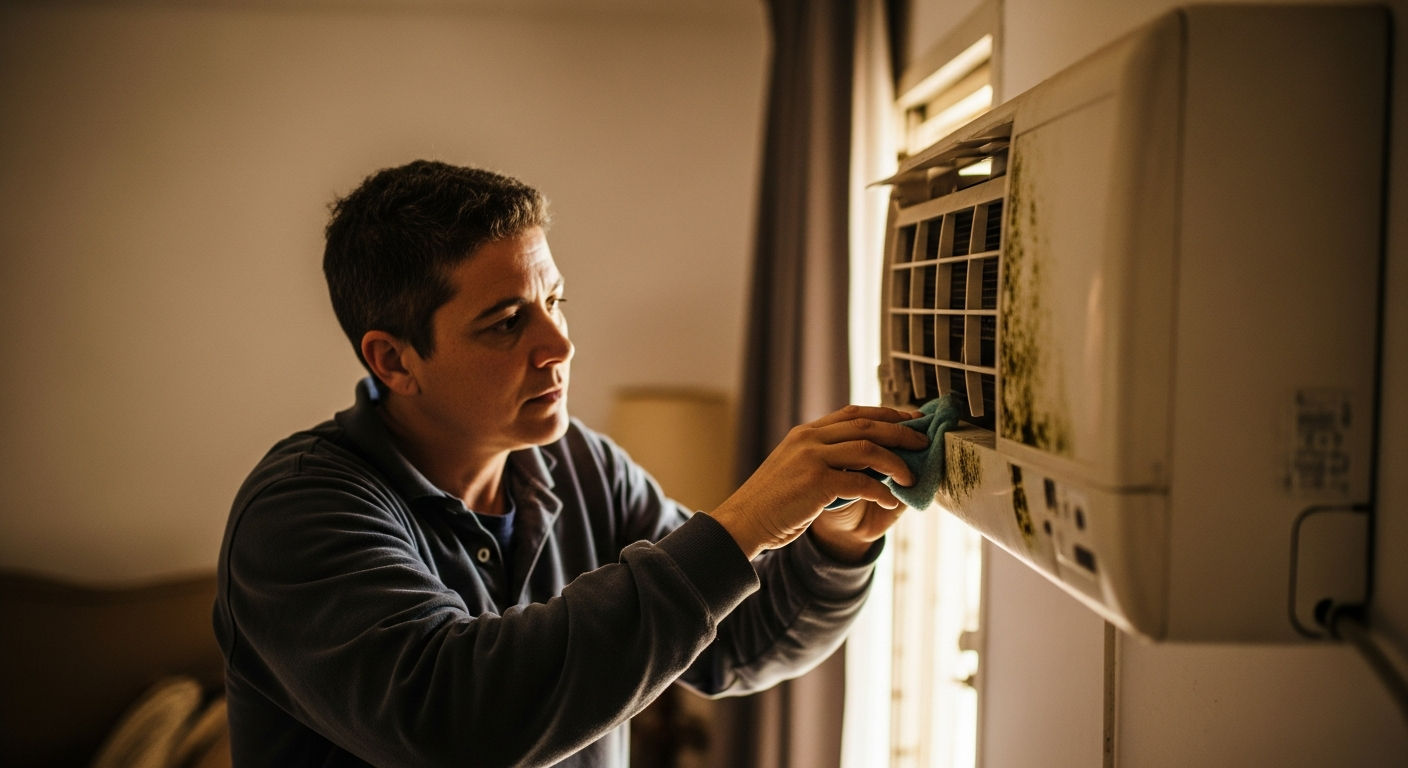
Cleaning a Mini Central Air Conditioner from Mold: The Comprehensive Professional Guide for 2024
When you turn on the air conditioner, does a musty, unpleasant smell spread throughout your home? Do you suffer from sneezing, a nagging cough, or eye irritation even though your home is clean and tidy? You may very well need the services of a Cleaning a mini central air conditioner from mold. In air conditioning systems, especially in mini central air conditioners that are hidden from view, moisture, dust, and dirt accumulate over the course of working hours, creating a perfect breeding ground for dangerous fungi, bacteria, and molds.
As part of ongoing home maintenance, a comprehensive air conditioner cleaning campaign is designed to ensure not only more efficient cooling or heating, but mainly clean, healthy air for you and your family. In this guide, written by Israel's leading experts in building maintenance, cleaning, and air conditioning, we will delve into the problem, explain precisely how to identify it and how to effectively treat it, and present all the professional information required, including a detailed price list.
Why does mold tend to develop in mini central air conditioners?
A mini central air conditioner draws warm air from the space through the return air vent, cools it, and distributes it back to the rooms through the air conditioning ducts (ducts). The cooling process is based on the evaporator coil (radiator), which cools very much during operation and causes the moisture present in the air to condense. This moisture accumulates into water droplets that are supposed to drain through the drain pan and from there out of the house.
However, in the Israeli reality, which is characterized by heavy dust loads and high humidity, the dust often penetrates the filters and sticks to the wet battery and the drain pan. The combination of Complete darkness (inside the cast), constant moisture, and dirt used as an organic substrate, creates an ideal breeding ground for mold spores. Once mold takes hold of the system and begins to thrive, the air conditioner's heat booster (blower) takes care of spreading these spores to all rooms in the house as soon as you press the remote.
The health dangers of neglecting air conditioner cleaning
The health aspect is undoubtedly the most critical when we are dealing with the need to clean a mini central air conditioner from mold. Daily breathing of air saturated with mold spores and bacteria over time, in a closed space, can lead to a variety of serious side effects, including:
- Allergic reactions: The appearance of a chronic runny nose, frequent sneezing, red and watery eyes, and itchy skin.
- Worsening of breathing problems: Asthma flare-ups in children and adults, shortness of breath and unexplained chronic cough.
- Serious infectious diseases: In extreme cases of neglect, the accumulation of stagnant water in the air conditioner may lead to the development of Legionella bacteria, which causes the life-threatening Legionnaires' disease.
- Sick Building Syndrome: Chronic fatigue, headaches, and dizziness as a result of prolonged exposure to polluted air from within the system.
What types of mold are common in our air conditioners?
Several types of biological contaminants can be found in air conditioning systems in Israel. The most well-known of these is the Aspergillus mold, whose spores are easily airborne. Another worrying type is the black mold (Stachybotrys), which produces toxins (mycotoxins) that are considered very dangerous to the nervous and respiratory systems. The presence of these illustrates why you should not compromise on the quality of the air in your home.
How do we know it's time to order a mold cleaning service for a mini central air conditioner?
You don't have to be a certified refrigeration technician to recognize that your air conditioner needs help. There are several clear warning signs that will alert you that your system is infected:
- Bad smell when operating: The first and most noticeable smell is a sour smell of mold, mildew, or a smell reminiscent of "wet socks" that appears immediately in the first few minutes after turning on the air conditioner.
- Black spots and mold spots: Dark spots appear on the air conditioning blinds in the rooms, around the ventilation openings (grilles), or on the return air opening in the hallway.
- Significant decrease in cooling output: The air conditioner works for hours but does not cool as it used to, due to the free passage of air being blocked by the evaporator coil ribs, which are full of dirt and mold.
- Drip and water leaks: Mold and scum (bacterial slime) tend to clog the drain pipe opening in the bathroom, which will lead to water dripping from the air conditioner onto the plaster ceiling and damage to property.
Professional air conditioner cleaning versus DIY cleaning – what can you do yourself?
Many customers ask if it is possible to save on the cost of the service and do the cleaning yourself. Our professional answer is: Partially and only basically.
Regular maintenance, such as opening the return air vent, removing the filter, washing it with soap and water, and drying it completely before replacing it, is a must-do activity every two months. This is the first line of defense. It is also recommended to wipe the vent louvers in the rooms with a damp cloth and a little disinfectant.
But when it comes to cleaning a mini central air conditioner from mold that has already accumulated deep within the internal system, it is imperative to seek the help of a professional. A mini central air conditioner is usually located in a narrow space inside a plaster ceiling, and access to it is difficult and cumbersome. The cleaning job requires dismantling the air conditioner casing, working near the electronic card and electrical wires, and using dedicated spray equipment. Opening and washing the system without the appropriate equipment and experience could lead to electrical shorts, breaking expensive plastic parts, or irreversible bending of the delicate cooling fins.
Professional work steps: This is how we completely destroy the mold
When an expert air conditioner cleaning technician comes to your home to perform the task, the work will be carried out in several systematic steps to ensure disinfection of the 100% and protection of the cleanliness of the home:
- Diagnosis and preparation of the work environment: Turning on the air conditioner for an initial inspection of its health, locating the source of the mold, and then deploying protective equipment, plastic sheets, and covers to protect the walls, floor, and furniture located under the service opening.
- Controlled decomposition: Opening the service hatch in the plasterboard ceiling, dismantling the suction duct and sometimes removing the access doors of the air conditioner itself to expose the internal coil, the blower and the drain pan.
- Installing a flushing sleeve: Wearing a special "apron" (sealed drain sleeve) around the evaporator unit. The sleeve receives all the rinse water, grease, and dirt and directs it directly into a large bucket, without splashing a single drop onto the walls of the house.
- Application of dissolving and disinfecting agents: Spraying professional antibacterial materials approved by the Ministry of Health. The materials are designed to dissolve fats, break down dust crystallization, and destroy the roots of mold and fungi.
- Washing with adjusted water pressure: Using a portable washing machine with low-medium water pressure (a special Garnik for air conditioners) to thoroughly wash the cooling coil, blower cylinder, and drain pan until the water flowing into the bucket is completely clear and clean.
- Preventive care and drying: Spraying a mold growth inhibitor, initial drying of the system, reassembling all plastic parts, and turning the air conditioner on in ventilation mode for final drying.
The direct connection between mold cleaning and significant electricity savings
Beyond the huge health benefit, there is an immediate financial advantage that is evident in your pocket. The air conditioner coil is made of very dense aluminum fins. When these fins are clogged with a layer of mud, dust, and mold, the heat exchange process is severely compromised. The air conditioner consumes more current and struggles to cool the room, which leads to continuous compressor operation without interruption. Performing a deep cleaning removes this blockage, improves air flow, returns the system to optimal energy efficiency, and can save tens and hundreds of shekels per month on your electricity bill.
Price list: How much does it cost to clean a mini central air conditioner from mold?
The cost of the service is not fixed and depends greatly on the level of access to the air conditioner (is the service opening adequate?), the level of contamination that has accumulated, and the need to treat various ducts. Below is a detailed table showing the average price range in Israel for this type of work:
| Type of service / job description | What exactly does the service include? | Estimated price range (NIS) |
|---|---|---|
| Standard mini central air conditioner cleaning (preventive maintenance) | Relatively easy access, battery cleaning and flushing, blower and water pressure drainage tub, and basic disinfection for light mold. | 600 – 850 |
| Cleaning a mini central air conditioner in a neglected state (severe mold) | Dealing with an air conditioner infested with mold requires more complex disassembly, multiple washes with specialized dissolving agents, and unclogging. | 900 – 1,400 |
| Unclogging a drain due to mold and mildew | Pumping and opening the drain line that was clogged with mold, without completely flushing the entire air conditioner. | 350 – 550 |
| Cleaning of ventilation shutters (grills in rooms) | Dismantling the grills in each room, washing thoroughly with soap and water, drying and reassembling to prevent the return of external mold. | 50 – 100 (per opening) |
* The prices listed in the table are average market prices, usually do not include VAT, and may vary depending on the executing company and the specific difficulty in the area.
What about the air ducts (the threads)? Is there mold hiding there too?
In most cases, mold grows and establishes itself in the evaporator and drain pan areas where moisture is constantly present. The air ducts (ducts) leading to the rooms are often left dry. However, when neglect is extreme, spores fly out and stick to the duct walls. The technician will perform a visual inspection using a flashlight. If severe internal contamination is discovered within a duct, in many cases the cheapest, cleanest, and most effective solution is to simply cut out the affected section of duct and replace it with a new duct, a process that is inexpensive and prevents future spore spread.
Pro tips: How to prevent mold from returning after cleaning?
Have you invested in a deep, professional cleaning and your air conditioner is sparkling? Excellent. So that you don't need another visit in the coming years, here are the maintenance secrets that will keep the system clean:
- The ventilation trick – drying the battery: This is the most important tip. Mold needs the moisture that remains after the air conditioner is turned off. To prevent this, get used to switching the air conditioner to the "ventilation" mode (Fan marking on the remote control) for about 10 minutes before you turn the system off completely. In this mode, the compressor is off, and the warm air from the house completely dries the moisture remaining in the cooling coil. Without moisture – there will be no mold.
- Cleaning filters regularly: Be diligent about washing the return air filter. A clogged filter forces the air conditioner to work harder, sucks dust past it directly into the coil, and increases the level of condensation in the system.
- Using UV lamps for air conditioning systems: An advanced technological solution is to install an ultraviolet (UV) lamp near the cooling coil in the plaster ceiling. The UV rays sterilize the air and prevent the development of mold and bacteria at a level of 99.9%.
- Ventilate the house: Despite the convenience of having an air conditioner on, it is important to open windows several times a week to let in fresh air, dry out trapped moisture in the home, and improve overall air quality.
Summary and conclusions
Ignoring moldy smells or black marks on your air conditioning louvers does not eliminate the problem, but rather ensures that it worsens. Cleaning a mini central air conditioner from mold It is far beyond an aesthetic task – it is a maintenance operation of paramount importance for maintaining the efficiency of the system, saving on inflated electricity costs, and above all – protecting the health of your household from dangerous air pollutants.
When ordering an air conditioner cleaning service, be sure to choose qualified professionals who have the appropriate equipment, standard disinfectants, and extensive technical knowledge. Thorough professional care will give you peace of mind, extend the life of your air conditioner for many years, and restore to your home the quality of life and clear air you deserve to breathe.